A Uniform Civil Code in Narendra Modi’s India has ostensibly no place for queer people
Source: wikimedia.org

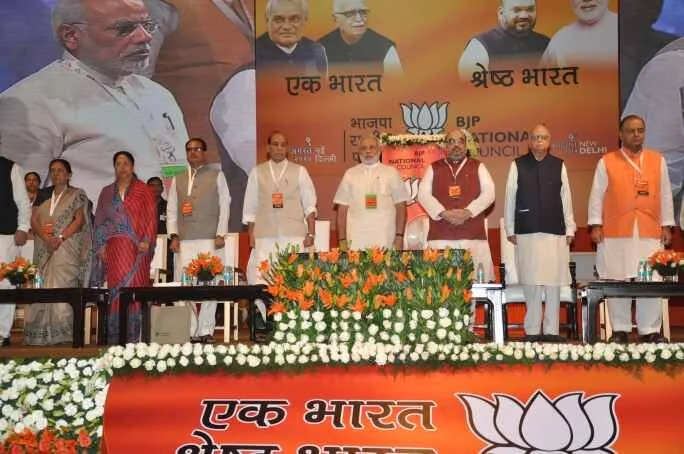
Following the heels of Justice Prathiba M Singh’s high court order dated July 7, 2021, members of parliament (MPs) of the Hindu-nationalist Bharatiya Janata Party (BJP) are now slated to introduce private members' bills on population control and uniform civil code (UCC) in the monsoon session of the Indian Parliament. Although 1970 was the last time a private members’ bill ever became law in the country, such developments are sociologically relevant because they signify the ideological hardening of the BJP’s 2014 and 2019 election manifesto promise of implementing a UCC in India.
In her order, Justice Prathiba M Singh said that modern Indian society was "gradually becoming homogenous, the traditional barriers of religion, community and caste are slowly dissipating". Hence, a UCC "ought not to remain a mere hope". But is Indian society truly becoming more homogenous? The latest recent Pew survey results on religion, tolerance and segregation in India demonstrate what leading scholars of modernity like Zygmunt Bauman and Jock Young have been saying for a while. That with the advent of globalisation, privatisation, digitalisation, and individualisation (in India’s case, the structural reforms of the late 1900s and the subsequent opening up of the economy in 1991), society cannot be so neatly classified as being either more or less homogenous. Instead, societies will be characterised by an “othering” of others based on social identity markers such as caste and religion. And a heightened perception of differences between groups. No wonder most respondents in the Pew survey respected others’ diversity, yet preferred living segregated lives- especially when it came to marriage.
When it comes to marriage in India, all our personal laws discriminate against queer people in general and heterosexual women in particular. And I argue that a UCC under the BJP wouldn’t advance the cause of either of these two groups of people, even though the BJP has been credited in the past for advancing women’s social and political rights in India.
Source: wikimedia.org

Rather than fight for gender equality, the BJP’s gender politicking reeks of what I’d call “selective majoritarian appeasement”. Allow me to explain. Take, for example, the party’s brazen double standard on the issue of Triple Talaq and marital rape. While the BJP has ostensibly supported repealing Triple Talaq citing “gender justice and equality” for not just Muslim women, but in fact for all “humanity” (quoting the then-Union Law Minister, Ravi Shankar Prasad), the same party vociferously opposed pleas in the Delhi High Court seeking to criminalise marital rape in India. And this time, the BJP argued that marital rape could not be treated as a criminal offence in India because "it could become a phenomenon which may destabilise the institution of marriage and an easy tool for harassing the husbands"- Not only is this claim patently false and not supported by any credible sociological evidence, but it also reeks of gaslighting. The then-Union minister for women and child development, Maneka Gandhi, doubled down on this by arguing that the "international" concept of marital rape could not be applied to India due to various factors such as education, illiteracy, poverty, religious beliefs, and mindsets. Very similar obscure arguments were made by the BJP recently to oppose the legalisation of same-sex marriage in India as well.
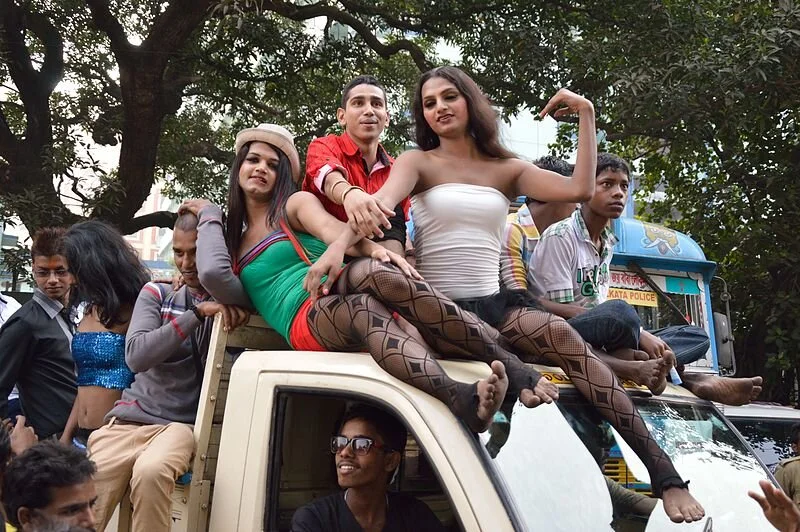
Thus, if India were to introduce a Uniform Civil Code, how “uniform” would it be for people of different religions, castes, genders, and sexualities? And who gets to decide whether sexual minorities and gender diverse people fit into the ambit of an “Indian family” unit or not? If they do not fit in, why should they be excluded from the UCC? As already pointed out, a Hindutva model of the UCC may be worse for “women”, but I’d like to be more specific. While a UCC may indeed be worse for heterosexual women, it would most definitely be the worst for the entire queer community – especially sexual minorities- because almost all conversations around the UCC in India are still cisnormative and heteronormative. Moreover, the BJP is doing nothing to change this nor challenge this at the central level. Thus, a BJP-led UCC under conservative Prime Minister, Narendra Modi will most definitely not guarantee equal gender and sexual rights to all Indians.
Source: wikimedia.org
.jpg)
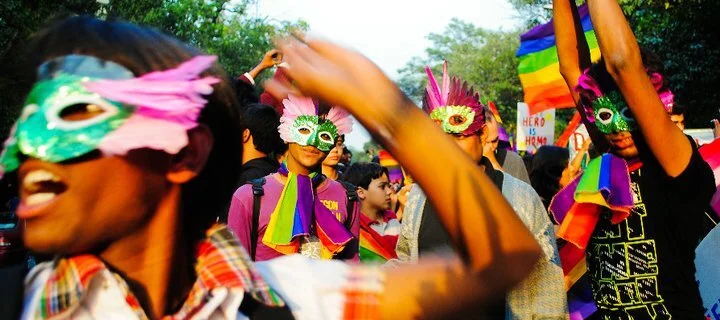
Now, although the BJP-led Karnataka government recently amended Rule 9 of the Karnataka Civil Services (General Recruitment) Rules, 1977 to reserve 1% of all government job seats for Transgender people; and although the then-Union Minister for Social Justice and Empowerment, Thawar Chand Gehlot, launched an online portal for transgender people to apply for gender certificates via self-affidavits, the same government doesn’t conceive of transgender people as constitutive of the Indian family unit (marriage, the BJP says, can only be between “biological” men and “biological” women). Meanwhile, sexual minorities in India continue to face discrimination, shame, stigma, and isolation vis-à-vis their “non normative” sexual identity with no support or recognition from the state. Thus, what kind of “gender equality” and humanism was Ravi Shankar Prasad talking about? And why is it so selective and restrictive?
While addressing the National Human Rights Commission back in 2019, Home Minister Amit Shah said that “Western” standards of human rights cannot be “blindly” applied to India. And although he wasn’t talking explicitly about marital rape and queer marriage in his speech, it is coincidental that most western countries have criminalised marital rape and legalised same-sex marriage. In fact, even places in the “east” like Taiwan have done the same. So, it's not only false to call these progressive advances in human rights a “western” phenomenon, but also sociologically irresponsible and culturally relativist.
The bottom line is that the current government’s track record amply shows that a Hindutva version of the UCC would offer “selective” gender equality at best, and exacerbate the already wide divide between the queer and non-queer community’s socio-legal standing at worst. Until our courts, media houses, legislative bodies, civil society actors, and opposition state governments coalesce around this government and pressure it to think more holistically and inclusively about marriage, family, intimacy, sexuality, and love in India, any promise of social justice under the to-be BJP- backed UCC Bill will remain a pipe dream for queer people in India.
DISCLAIMER
Views expressed above are the author's own.
About the Author
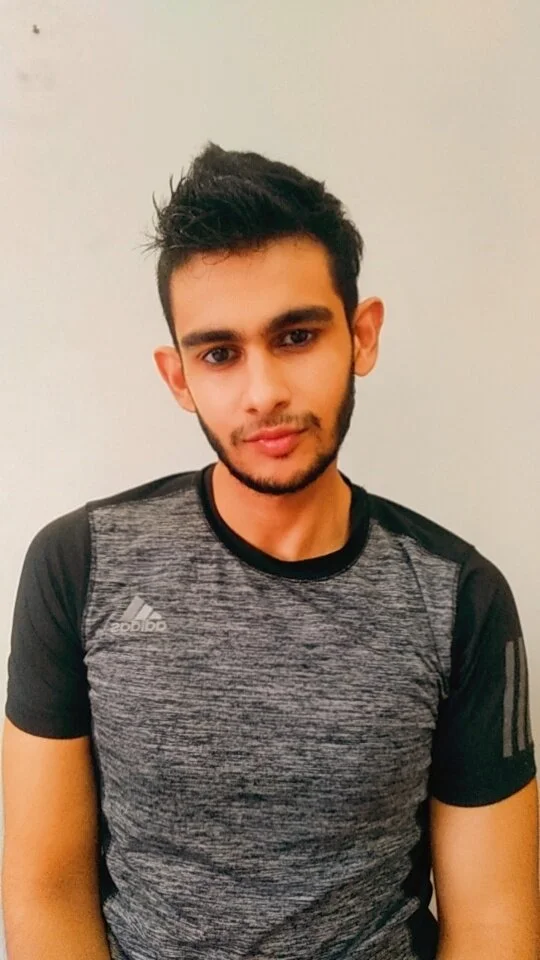
Kanav Narayan Sahgal (Pronouns: He/Him) is the Samvidhaan Fellowship Programme Manager at Vidhi Centre for Legal Policy, India. He is also a Post-Graduate of Development Studies from Azim Premji University, India. He identifies as queer for personal and political reasons and writes about social exclusion and marginality from an interdisciplinary sociological perspective. For any questions or queries, reach out to him on LinkedIn or via email at sahgalkanav@gmail.com