How Middle East Oil Can Make or Break China’s Potential Challenge Against U.S Global Preeminence
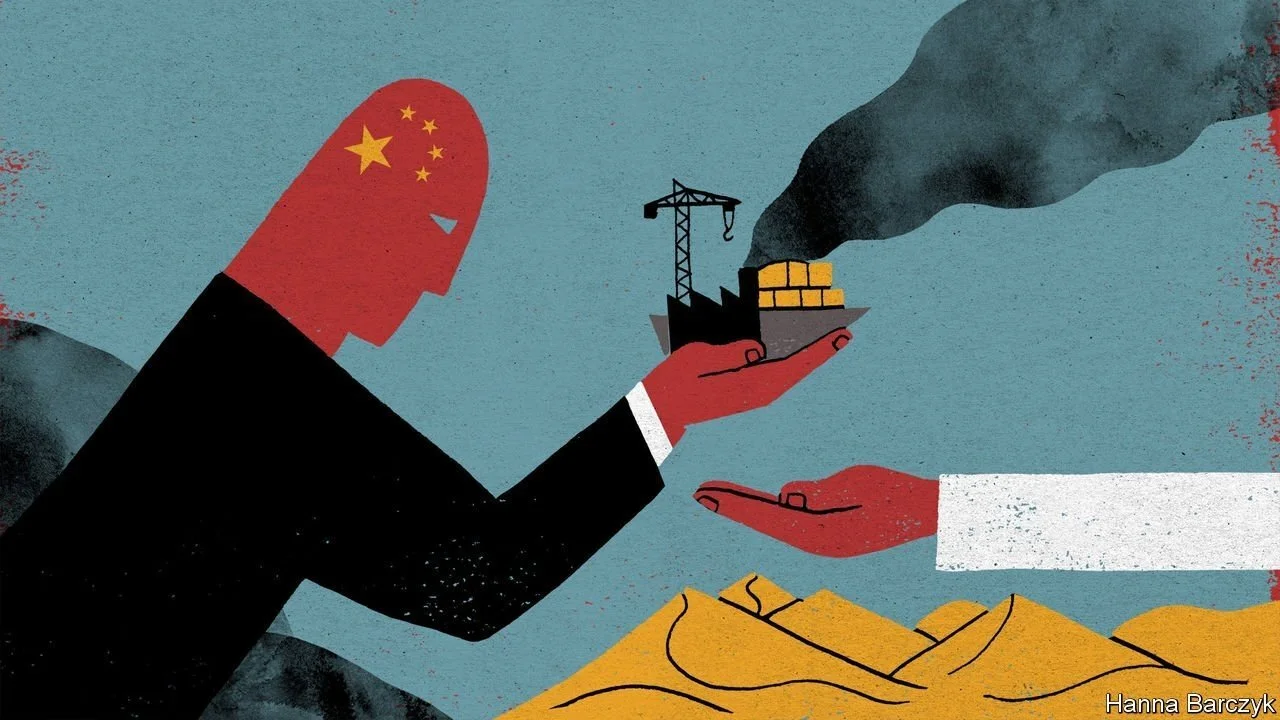
Recent history shows that China’s emergence as an economic and military superpower is linked to it developing an international economy not dissimilar to the current U.S. led global economic system. China’s ability to become the world’s leading economic force is arguably interconnected with its ability to maintain access to Arabian/Persian Gulf oil and to further globalize it manufacturing-export industry, the backbone of China’s economy. In fact, due to its burgeoning manufacturing-export industry China has risen to become a global leader in land and maritime construction, specifically in highways, dams, ships, nuclear power plants, high-speed railways and maritime ports. This policy forms part of China’s pan intercontinental vision of connecting Asia, Africa and Europe through the construction of land routes and seaports, in other words, through infrastructural integration. For example, China has established an extensive and potentially long term commercially stable chain of marine ports that stretch from the Indian Ocean to the Middle East, East Africa and the Mediterranean. More broadly, China’s new global policy seeks to “deepen ocean related cooperation by fostering closer ties with countries along the (Belt) Road, drawing support from the coastal economic belt in China. Ocean cooperation would focus on building the “China-Indian Ocean-Africa-Mediterranean Sea Blue Economic Passage”, which would link up the land routes also being developed: the China-Indochina Peninsula Economic Corridor, the China-Pakistan Economic Corridor and the Bangladesh-China-India-Myanmar Economic Corridor”. In addition, China also plans to construct an economic passage which stretches “from the South China Sea into and across the Pacific Ocean, and to Europe via the Arctic Ocean”. This able project is known as the ‘“Vision for Maritime Cooperation under the Belt and Road Initiative”’ and was proclaimed recently in 2017 by both the ‘National Development and Reform Commission and State Oceanic Administration’.
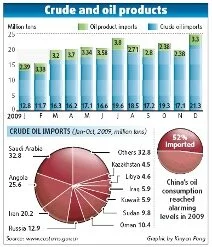
However, China’s geo-economic expansion comes with a high price - the loss of economic independence and instead a reliance on external markets for its industrial exports including the ‘imperative procurement oil and natural gas “to fuel further development” and growth’. According to a Danish Institute for International Studies report, China is particularly dependent on the Middle East’s natural resource wealth since the Gulf represents 55% of China’s oil imports which are key to its modernization drive a prerequisite for achieving superpower status. China’s Communist Party recognized this reality in “its 10th Five Year Plan (2001-2005)”: which states that “securing oil supplies from abroad is essential to China’s continued economic growth and modernization”. The importance of the Middle East lies in the fact that only the Gulf producing countries can present China with the complete package of substantial proven oil reserves, comparatively “low development and production costs” and “idle surplus capacity”. The Gulf’s vast oil fields also offer China’s burgeoning energy industry - commercial security through opportunities for external investments. This includes the right to exploit and invest in Gulf oil such as the China National Petroleum Corporation’s successful development of the Rumaila oil field in Iraq. In addition, ‘the Gulf is also a potential market for Chinese products and a gateway for re-exporting these goods throughout the entire Middle East all the way to East Africa’. Therefore, based on the evidence, it is safe to conclude that the Gulf is best suited to provide China with the energy security it requires to support three major components of any ambitious economy: its rapid and expanding industrialization; its internal oil needs; and its huge and growing population. A dynamic and powerful industrial sector backed by a large, vibrant, educated and healthy population is key for China if it has hopes to become the primary 21st Century economic and military challenger to the U.S.
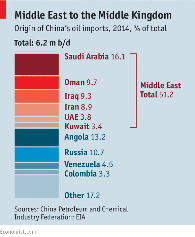
As a matter of fact, over the last 25 to 30 years China has pursued a rigorous policy of accessing Gulf oil, a strategy which can be described as ‘China’s pivot to the Middle East’. This pivot is due to China’s increasing reliance on oil imports which stands at around 50% of its total consumption and the fact that the majority of those supplies originate from the unstable Gulf. In fact, the records suggest that China started developing a reliance on Gulf energy supplies only recently in 1993 when it began transitioning from a net oil exporter to a net oil importer. This transition and pivot towards West Asia are due to the fact that China “has no near-term substitute for Middle Eastern oil”: its “oil fields are almost fully exploited”; while China's own regional environment (East Asia) suffers from a scarcity of oil and natural gas resources. Moreover, in 2013 China surpassed the U.S. to become the world’s largest oil importer, while according to an Energy Information Administration analysis, its increased oil consumption accounted for around two-thirds of global consumption by 2019. These statistics parallel the United States’ own growing dependence on the Gulf’s huge oil stores especially Saudi Arabian oil when it emerged as a superpower in the post-Second World War setup.
In conclusion, the similar trajectories taken by both the U.S. and China towards adopting a Middle East focused oil strategy is the result of the discovery of vast amounts of hydrocarbon resources in the region in the first half of the 20th Century – a discovery which changed the dynamics of international power politics. This is because in the post-oil world, controlling the supply of oil is a precondition for a power-hungry State if wants to a realize designs for “global economic and military power”. As the renowned international relations journal, the Foreign Affairs observed: ““oil is power” in time of peace” ‘to setup great industries’ “and in time of war ““to expand industry and exert strength at great distances””. Thus, the success of China’s grand economic and military vision hinges on a long-term strategy that will ensure a stable flow of oil supplies from the Middle East. However, China’s dependence on a steady stream of Gulf oil makes it effectively vulnerable to U.S. naval supremacy in that region and in the sea-lanes which connect the Gulf with the South China Sea.