Japan and South Korea: wounds of the past, impossible reconciliation
Japan and South Korea are close in many ways, especially by sharing certain similar economic and geopolitical profiles. Japan and South Korea are respectively the second and third largest Asian economies with both countries boasting well-developed electronic and technological industries. Their geopolitical stances are also quite similar as Japan and South Korea are two strong allies of the United States in the region and share similar geopolitical concerns: the aggressive threat of Pyongyang and the rise of their Chinese neighbour. These geopolitical and economic similarities should make cooperation and friendliness come easily among the two. However, the Asian powers are entangled in a multifaceted rivalry. One that is historical, going back to the Japanese Empire’s colonisation of the Korean peninsula; and territorial, with disputed land widening the rift.
Part 1: Background (history)
Back in 1876, Japan established the unequal Treaty of Ganghwa Islands with Korea, which would later find itself at the crossfire of the Sino-Japanese War (1894-1895), when the Japanese chased off Chinese influence over Korea, and the Russian-Japanese War (1904-1905), which would ultimately give Japan a stranglehold over the peninsula.
As a point of contention and strategic territory, Korea played a central role in the foreign policy of Japan during the Meiji era. In 1905, the peninsula became a Japanese protectorate and was annexed five years later. Korea was to stay under Japanese domination for the next 40 years.
The consequences of this annexation are far-reaching. For Korea, it was the start of modernisation but also of a brutal repression. The Japanese Government sought to profit at the expense of the Korean economy. Financial domination took many forms: control over Korean resources, the creation of banks favorable to Japan and colonisation along its railways. The annexation brought the deterioration of living conditions, both in the countryside and cities, as the Japanese exploited food resources and took them to their own nation. Some 2 million Koreans were displaced and had to leave for Manchuria, north of Korea.
Because of the country’s status as a colony, and as a territory of the Empire, the Koreans participated heavily in World War II efforts. In effect, Korea became a reservoir of soldiers. Korean men were sent to the battlefields and, infamously, many Korean women were sent to the Japanese occupied territories as “comfort women.” Historians estimate that roughly 200,000 women were victims of sexual slavery by Japanese soldiers, some 80% of which are thought to be Korean.
Korea regained independence after the Japanese Empire surrendered in 1945, ending 40 years of repressive domination.
Part 2: Overview of the relations since end WW2
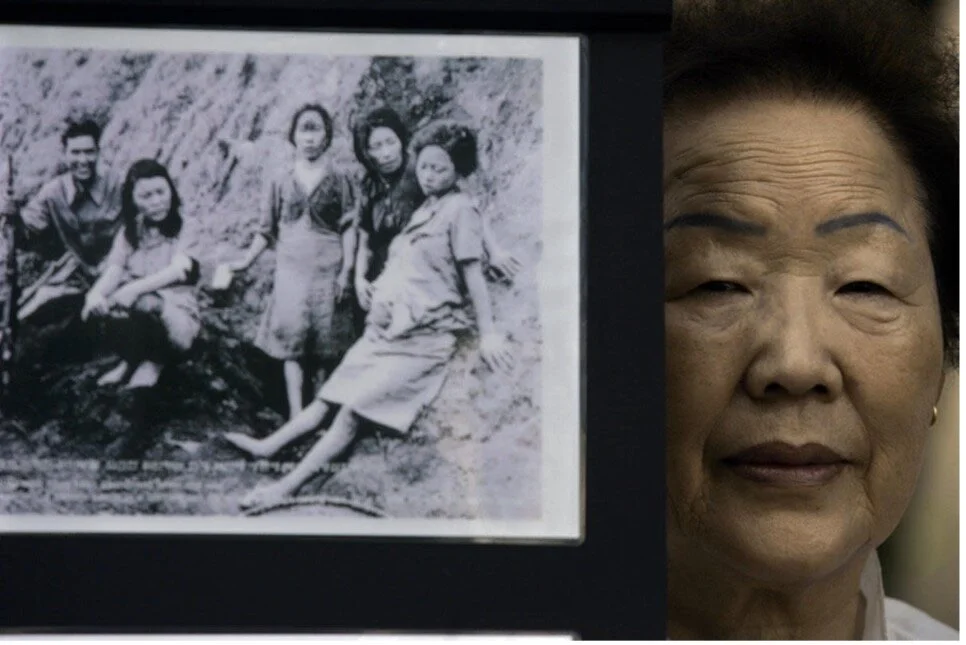
- Comfort Women
Although the Second World War ended in 1945, its repercussions are still very palpable today, as they shape the relations between Japan and South Korea. Especially so when it comes to “comfort women.” Women were sent to “comfort” Japanese soldiers in the battlefield, in a bid to curb the huge amount of sexual violence caused by the Japanese military in China and prevent potential diseases. The enslaved women were sourced from Japan’s recently colonised territories, such as South Korea, where women were not entitled to Japanese citizenship.
The history of “comfort women” was silenced and neglected for years after the war. This silence is linked to the history and culture of Korea. At the socio-cultural level, the ideology of chastity is deeply rooted in Korea, for women losing their virginity was an absolute disgrace. As victims of sexual violence, survivors internalised shame and remained silent in fear of being stigmatised.
But the international community bore its share of responsibility as well. After the occupation of Japan, Korea was divided and occupied by the US and the USSR. In the settlement between these great powers, Japan’s war crimes, including the “comfort women,” were not called into question.
As openly pro-Japanese leader Chung-Hee Park took over the South with a coup d’etat in the 1960s, the country would favour Japan as an economic partner, agreeing to relinquish several claims against Japan’s abusive practices during colonisation, including “comfort women.” By promoting development first policies, South Korea denied its own people, victims of serious human rights violations, any sort of closure.
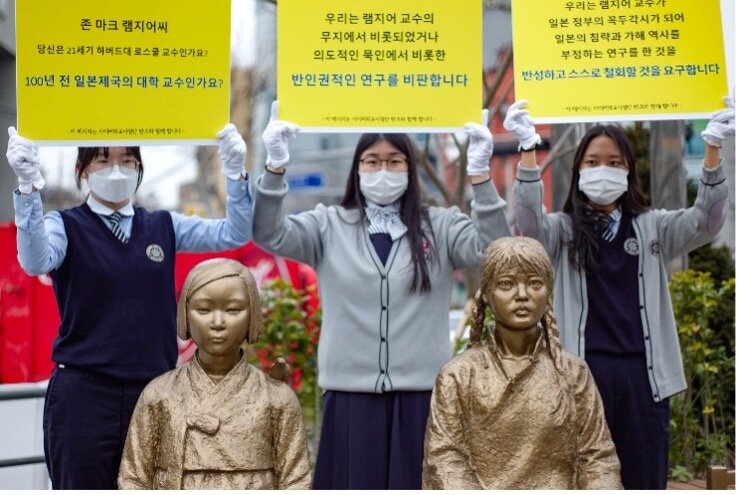
It is only in the 1990s when the issue is reconsidered, as the Korean Council for the Women Drafted for Military Sexual Slavery is created, with the objectives of revealing the truth about sexual slavery, obtaining an official apology by Japan, compensating the victims, building a memorial and representing history accurately in Japanese textbooks.
Victims started to emerge, breaking silence and gradually changing the official stance of the Japanese government, which went from complete denial until 1991, to admitting that “comfort women” were forcibly mobilized by the Japanese army in 1993. That was the first time the Japanese acknowledged these facts, but the state continued to evade responsibility for it.
It was only in 2015 that Japan agreed to compensate victims with a billion Yen, although victims were left waiting for an official apology.
- Takeshima Islands
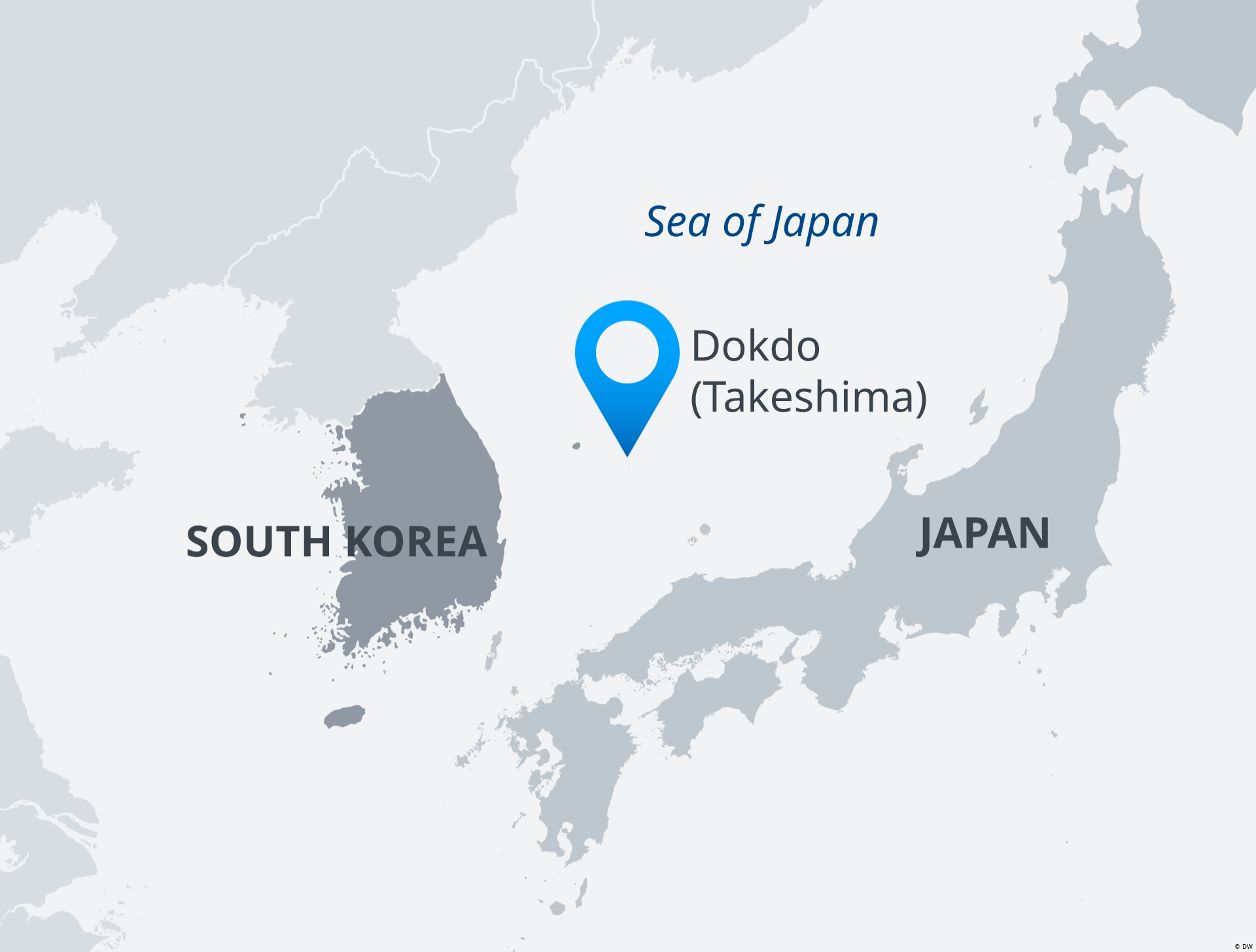
The islands of Takeshima, for the Japanese, or Dodko islands for the Koreans, have been in the middle of a dispute between the two nations for decades.
Japan claims it has had knowledge of these islands for a long time, a claim supported by historical documents. Since the 17th century, the Japanese went to hunt on these islands and fished its marine resources. For Japan, its sovereignty over Takeshima is long established, at least since the mid- 19th century.
The South Korean Army has built several military facilities and lead defensive military exercises every year on the Islands, despite Japanese protests. To justify its occupation, South Korea claims it had knowledge of the Takeshima Islands before Japan, using historical documents and maps. The South Korean public opinion also considers that the incorporation of the Takeshima Islands into Japan in 1905 was the prelude to the Japanese colonisation of Korea between 1910 and 1945.
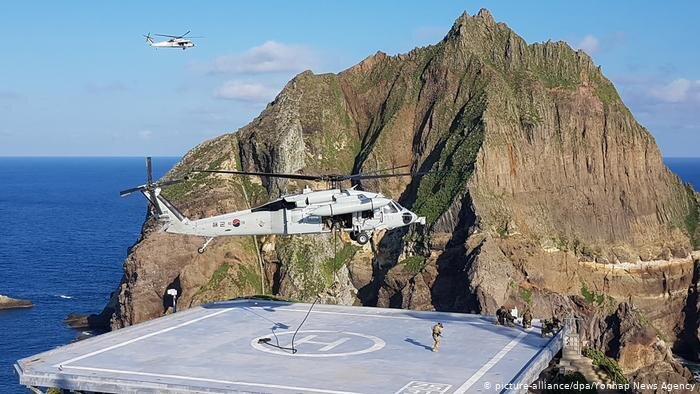
Japan has proposed to bring the dispute three times to the International Court of Justice, but it has been rejected systematically by South Korea.
Since the end of the Second World War, Seoul and Tokyo have moved closer to each other, but tensions are steadily rising along. Although an agreement has been reached between Tokyo and Seoul regarding “comfort women,” survivors and activists still need an official apology from the Japanese government. The Takeshima Islands dispute is still unresolved. South Korea refuses to bring the dispute to the International Court of Justice while Japan still claims historical rights over these islands.
Seventy-one years have passed since the end of WWII, but memories of the time still structure relations between the two countries. These tensions are mainly historical and territorial, which makes it hard to reach a peaceful settlement or agreement between the strongly nationalist countries. The wounds of the past live on. Relations between Japan and South Korea are complex, old, and manifold. A certain intransigence from both sides promises to keep it that way for years to come.
About the Author

Bonjour! My name is Louise Bouet and I am from France. I am currently going into my final year of BA International Relations at King’s College London, where I specialise in international law, human rights, and East Asia. My interest in international relations do not stop there as I also enjoy learning about the Middle East and Development Studies. In my spare time, I tend to be a bit of a museum nerd and enjoy traveling.