Lebanon in Times of Uncertainty
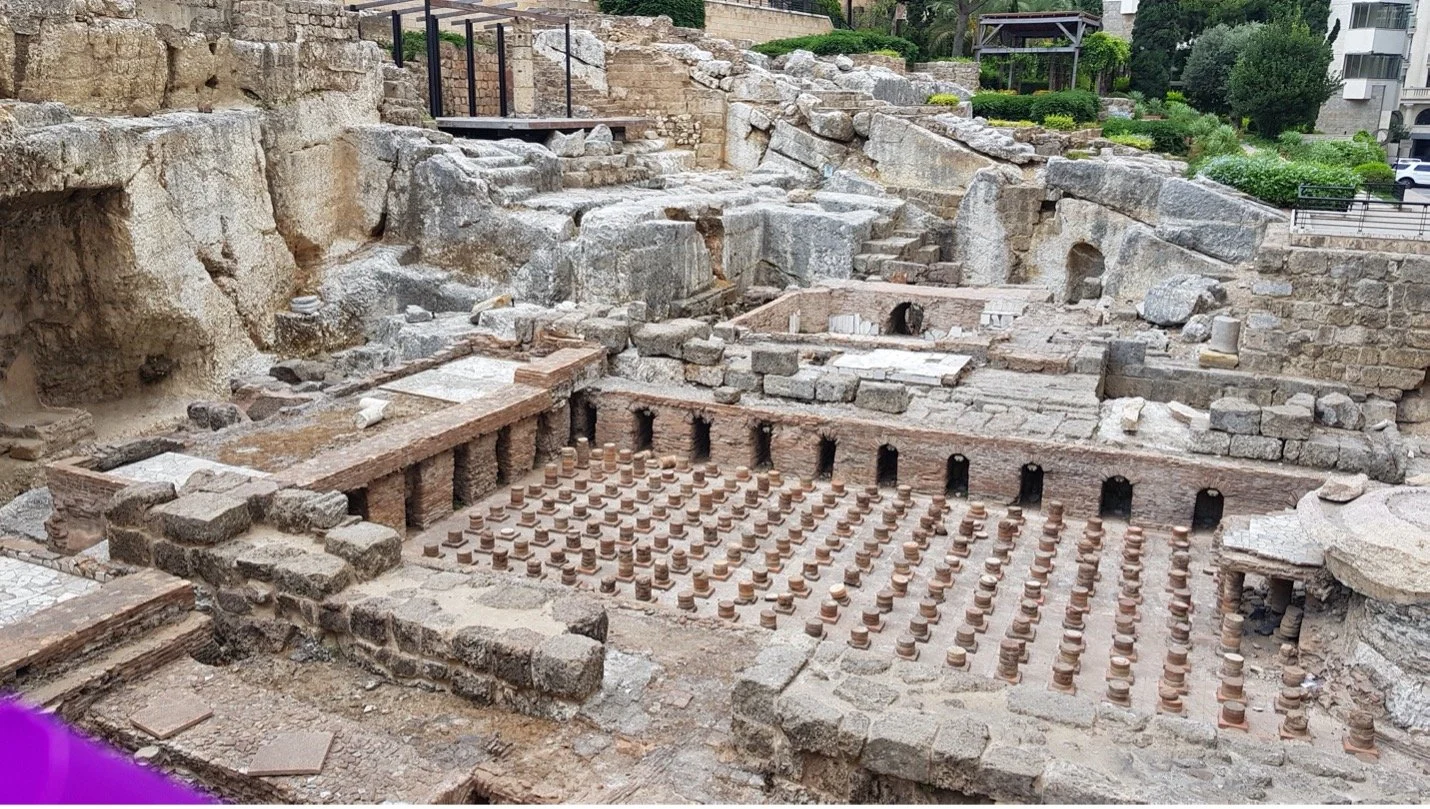
Picture 1. Roman Baths in Downtown Beirut. Remains of an ancient civilisation
Lebanon has played host to numerous regimes across the millennia. From the ancient civilisations – Greek, Roman, Egyptian, Persian, and Phoenician – to modern oligarchies and democracies – Ottoman Empire and the French Mandate. Throughout this rich history, citizens and residents of this small, Middle Eastern country have enjoyed the perks of functioning and thriving systems and paid the price for the failings of those same systems.
Today, Lebanon and its citizens and residents pay the price for yet another failing regime. This time, however, the responsible party is the Lebanese government. It is no secret that politicians in parliament and government are accused of long-term corruption, political plays, and mismanagement of country resources. Their actions have created an involuntary, yet inevitable, social and economic divide that widens with time, pushing more and more Lebanese people into poverty.
Not unlike the civil war, the battles facing the residents and citizens of Lebanon are ones of survival and basic needs. They are tasting the fruits of trees poisoned by the waters of corruption, sectarianism, and political chess games.
The Fruits of the Poisoned Tree
For the past year, hardworking individuals find themselves at the mercy of a fluctuating exchange rate of US dollars (USD) to Lebanese Pounds (LBP). This is old news, something that any Lebanese expat, citizen, resident, or concerned human knows about. The official rate of LBP to USD remains 1,500 to 1. However, outside of public affairs, this rate is part of Lebanese history. Banks are operating at their own rate of 3,900 LBP to 1 USD, while the free-floating market is open to the ebbs and flows of economic demand[1].
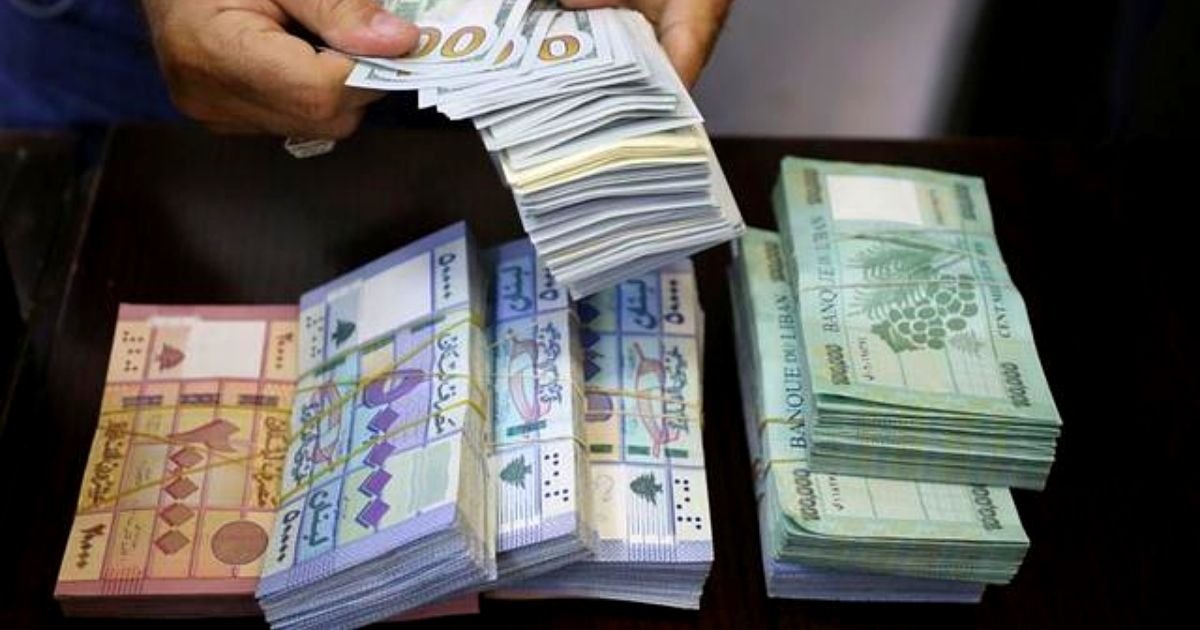
The government’s mismanagement of country resources and the Lebanese leaders’ greed and self-interests have put a strain on the country’s finances. The central bank’s foreign currency reserves are nearing their end, and for the past couple of months the country has lifted subsidies from necessary commodities – for example, petrol, diesel, and medications.
This has opened the commodities and services to the free market, which fluctuates depending on demand and supply. With an unstable and inconsistent rate, prices within the market – be it of groceries, medications, or petrol and diesel – have become unsustainable and unrealistic for a majority public – whose purchasing power has decreased significantly in the past year. Shops, petrol stations, bakeries, and basic commodities and services like electricity, water, transportation and bread are under threat of disappearing, or becoming too expensive to sustain or purchase.
Therefore, many retailers are finding it too expensive to purchase certain products. The greatest and most important good that is suffering is medication. It is not uncommon, at one point, to go into a major pharmacy in Lebanon with a list of medications and come out empty-handed. During the past summer, Lebanese expats offered to purchase certain medications from their resident countries, and bring them to relatives, friends, or even strangers when they come to visit[2].
In response, many individuals would resort to substitutes with same chemical make-up to resolve the medical shortage; even then, we still see that some life-saving medications are unavailable. We see a similar response across multiple goods, where the original or popular brands are being replaced by new, unheard-of brands. A lot of people have chosen to opt against purchasing certain goods because they have become a luxury.
In the midst of all of this uncertainty and drastic shifts, a vicious cycle is born.
The Vicious Cycle
As more people find themselves falling into poverty, their choices become weighed and limited. They find themselves thinking twice before spending their money. A person needs to consider that purchasing fuel for their car or paying for electricity comes at the expense of another of their needs (e.g., food, medication, or their children’s needs). The less people can spend on good and services, the greater the economic strain is on the country. More businesses find themselves at a loss, and to stay afloat they are cutting wages or employees. This in turn leads to more people crossing the poverty threshold and so it goes.
To make matters worse, the government’s inability to provide diesel for electricity has left the people at the mercy of personal and/or privately owned generators. Without a subsidy to lessen the cost, the price of maintaining electricity has become unsustainable, leading to major blackouts all over the country. Unfortunately, the impact of the diesel crisis has extended to various sectors, including the health, the communication and the food and beverage sectors.
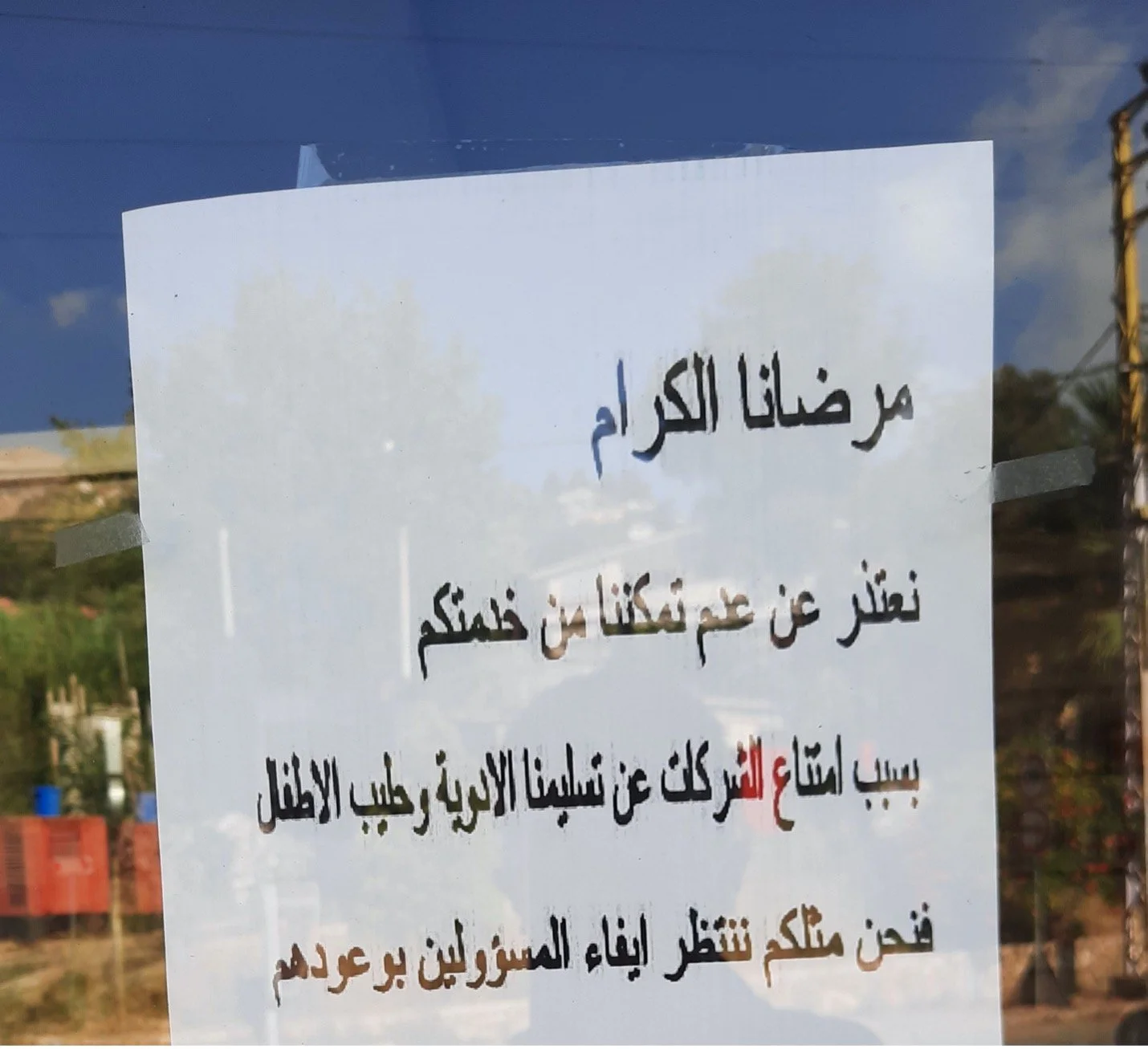
Picture 2. A note outside a pharmacy, apologising for the lack of medications and calling for the government to uphold their promise
Hospitals around Lebanon have resorted to resting the generators for a few hours during the day, considering the power outages and diesel prices. They are reserving the use of round-the-clock electricity for life-saving equipment and vital functions. Earlier this summer, it was a challenge because of diesel shortages, for now this has been resolved. However, the problem is that to keep up with the increased prices of fuel, medical equipment, and other costs, healthcare has become unaffordable. This is all happening with the COVID-19 pandemic in the background –where proper, affordable healthcare and available medication can mean the difference between life and death.
Additionally, it has become the norm to find communication issues and networks failing to connect, because the internet hubs and cell towers are experiencing outages. The backup batteries and generators for certain cell towers in regions across Lebanon are unable to keep up with recent power outages. Add to that, the strain these outages are putting on neighbouring cell towers are causing further communication challenges. This poses a problem because without reliable electricity or internet, work and education take a further hit, feeding the vicious cycle.
Another major sector to take a hit is the food and beverage. Whether it was a restaurant, supermarket, or a local mini-mart, power outages for a long time do not bode well. Food, especially in the recent summer, was improperly stored leading to many people getting food poisoning and purchasing expired foods. In response, restaurants had to adapt their prices and their schedules. Many places became too expensive, and had to close, while others opted for more delivery services instead of dine-in options to save electricity for more crucial functions. Other restaurants chose to limit the time they open during the day, to minimise their electrical expenditure. All of these limited customer spending, removed potential jobs, and led to many restaurants closing – further stifling the economy.
The cherry on top? Some banks have taken a hit, considering their involvement in the decline of the country. Branches are closing, and with the power outages, they have limited the time their ATMs are switched on to weekdays.
The Inevitable Social Divide
The truth is that with everything that is going on, the financial crisis has created a social divide of sorts. Residents of Lebanon fall into multiple socioeconomic classes, as it is around the world, but with a twist. Employed individuals in Lebanon may be paid in different currencies, either: “Fresh Dollar”[3], “Lollar”[4], LBP, or a mixture of the three.
Few businesses and organisations in Lebanon deal with clients or funders who live or work outside of Lebanon, and therefore, they can afford to pay their employees in Fresh Dollars. Another few businesses, mainly local, depend on clients within the region, and opt to pay their employees a minor percentage of their salary in Fresh dollars, while the rest is paid in Lollars. However, most of the Lebanese residents are getting paid in LBP, which is why they find themselves below the poverty line.
The existence of these three currencies has added an additional layer to the socioeconomic challenges and created an unfortunate social divide. Individuals who were lucky to work for an organization or business that caters to multinational clients earn Fresh dollars and find themselves on the top of the earning ladder. Others, who are getting a percentage of the “freshness”, come in next, while the people who earn in LBP are now living day to day.
The problem is that even people who are higher up on the earning ladder are facing issues. Limits are imposed on how much individuals can withdraw from the banks every month, especially at the rate of 3,900 LBP to the dollar (Lollar), so even if you could afford to live your life, the banks say otherwise.
What Awaits Lebanon and its Residents?
Sometimes, there are good days, where people feel like things are beginning to look up. Now, long queues in front gas stations are scarce, because the subsidy on fuel has almost lifted and it is available. People can go and come, up to a point. However, these days are becoming fewer and further between as the challenges pile up.
Lebanon has seen an exodus of modern proportion, and individuals who are relatively well-off are trying to find their own tickets out. While others, who have no other option, are learning to see the good days as blessings, and they are hoping that they see such days more often. It is the resilience of the citizens and residents of Lebanon that we see on social media posts and articles. The swift adaptation rate is profound, but the reality is that most people don’t have an option to not adapt. When survival is at stake, people will need to accept that status quo, because they need to put food on the table, pay rent, and survive to see another day.
But if and when basic needs become a luxury, will resilience and forced adaptation be enough, let alone possible? What does the future look like for Lebanon and its people? Only time will tell.
[1] At one point, in July 2021, the exchange rate in the free market was 1 USD = 24,000 LBP.
[2] Panadol, a common pain relief medication, was a rare commodity only a few weeks before this article was written.
[3] Fresh dollar refers to money coming from outside the country, and so can be withdrawn as US currency.
[4] Lollar refers to virtual dollars that can be withdrawn in LBP at the exchange rate of 3,900 LBP = 1 USD
About the Author
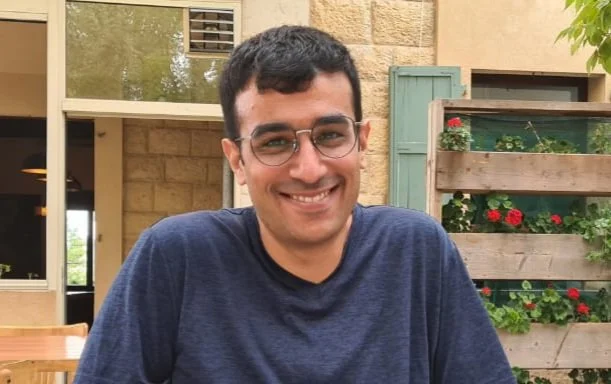

Hi, my name is Roy Sayegh, I am a psychologist and writer at heart. For the past year, I have been working within the humanitarian sector, learning to use my skills and education in the service of others.
For as long as I can remember, I love hearing people's stories, witnessing varying perspectives about daily life, and observing life unfold. It is through my work and life experiences that I realised my purpose: to write what I see and channel people's voices when they give me the chance.