New wave of migration crisis in Europe: tensions on Poland-Belarus border
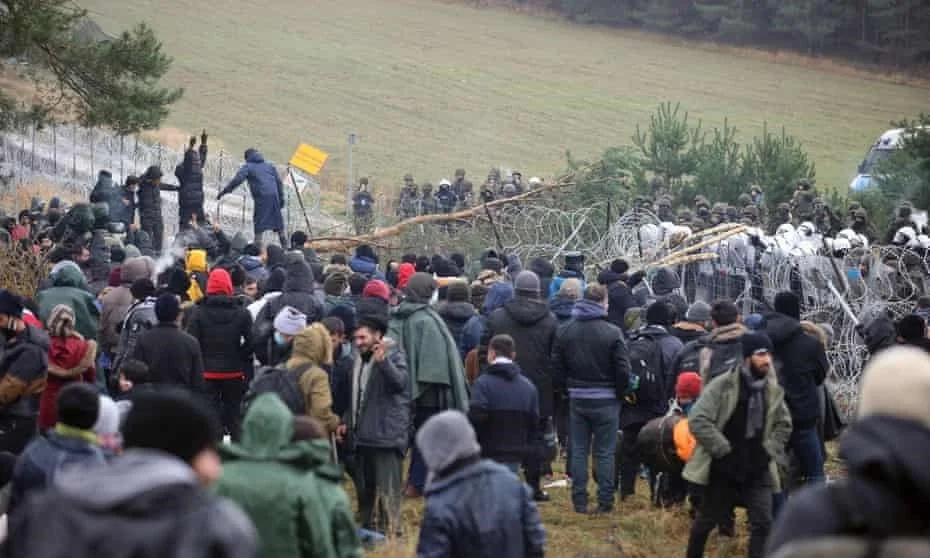
The new wave of migration crisis comes back to Europe with a greater strength. Recent tensions on the Poland-Belarus border and ex-Belarus leader Alexandr Lukashenko's play with allowance of Middle East refugees to use Belarus as a corridor for reaching the EU seems to be a counter-response to the Union's sanctions towards Belarus.
New hybrid warfare?
The EU's statement that Belarus had started a 'hybrid attack' on Europe together with Russia as its invariable ally fostered the instability in the region and gave birth to new conflicts inside the European Union. Polish officials together with the EU are convinced that the created situation directly touches the stability of the whole Union and is aimed to test its resilience. They also acknowledge that exactly Russian president – Vladimir Putin might be a main ‘mastermind’ behind this crisis with the ultimate aim – to destabilise the Union from within and detract attention from the shaky political situation in Belarus as well as ongoing war with Ukraine, which Kremlin constantly denies.
As a response to escalating tensions the European Union issued a number of sanctions that are targeting anyone involved in the process of ‘illegal push of migrants’ on the border and called Belarusian airlines “Belavia” to stop boarding flights from such ‘hot zones’ as Iraq, Syria and Yemen. Moreover, the Council of the European Union on the 9th December 2021 adopted a new regulation establishing the EU Asylum Agency aiming to improve the enforcement of asylum and migration policy in the Union. The newly-established Agency is going to work hand-in-hand with the national authorities responsible for asylum and immigration.
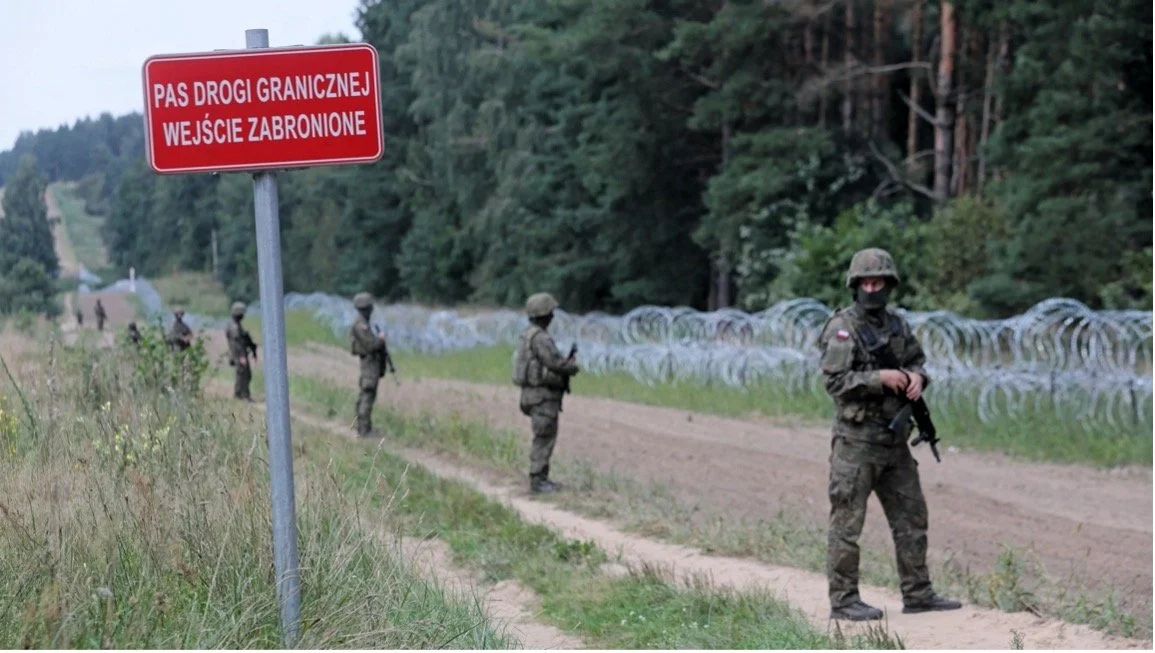
Poland in its turn has declared a state of emergency on its borders with Belarus and provided the police with extraordinary authority to expel refugees without reviewing applications for asylum. The state of emergency regime allows Poland to restrict access to everyone coming from Belarus, except for those ones who are legally living, working or studying in the designated zone. What is more, the other steps taken by the Polish government include building a barbed wire fence guarded by thousands of soldiers. Polish officials see the current crisis as a threat for states' security that creates an unstable political situation. From the words of Poland’s Deputy Foreign Minister Paweł Jabłoński : “The situation that we’re facing now is very serious. We haven’t seen anything like this in last three decades after the fall of communism. We’re constantly being under pressure both from members of Belarus’ security forces that are not only instructing these migrants, but also telling them what to do, where to go and how to attack our border guards […]”. “We are prepared to use any means necessary to defend ourselves, but with avoiding further escalation of the conflict”, – he added.
Humans used as political ‘weapons’
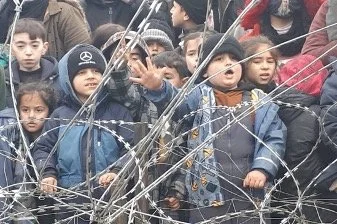
What will this situation mean from the human rights perspective? Stuck on the Belarus-Poland border thousands of migrants from Middle East are wandering in the surrounding forests trying to use Poland as a ‘humanitarian corridor’ towards better life in Western Europe. Polish officials have already declared several death cases and, if the situation will continue to unfold in the same vein, there’s a significant possibility that the cases may increase rapidly. The recent visit of UN Human Rights Team that took place from the 29th of November to the 3rd of December 2021 reported deplorable situation: limited access to food, clean water and shelter, freezing temperatures and threatening behaviour from the side of Belarusian security forces who are, from the words of migrants, pushing them by themselves to cross the border.
Due to the declared Poland’s Act on Border Protection and the state of emergency on its border with Belarus, the Polish government established a 3 km long exclusion line of so-called ‘dead zone’ where no access is granted, no matter it’s an NGO, human rights organization, media channel or humanitarian support. The UN Human High Commissioner sees this lack of access to be deeply concerning as it might also create a significant information gap in this area that poses a threat to democracy and transparency.
One more challenge for EU
Trapped between the probability of an escalated hybrid war on its external borders and unregulated migration flows within its internal borders, the EU got a serious ‘wake up call’ to act, where the EU asylum reform and implemented Regulation is just the first step on its agenda. Will the image of the Union as a guardian of human rights, solidarity and integration remain steadfast despite of numerous provocations from Belarus-Russia alliance?
Most likely, we might expect the crisis to be an ‘open question’ until the issues that are standing behind them remain unsolved. These issues include: the stabilisation of the political situation in Belarus and countries of emigration flows (i.e. Iraq, Syria), the continuation of sanctions towards the parties involved in the escalation of crisis, the maintenance of a multilateral dialogue and the allowance of presence of human rights representatives in the designated area.
About the Author

I’m a graduating Master’s degree student both at University of Salzburg, Austria and Luiss Guido Carli University of Rome, Italy (Double degree program) with a major in International Relations and European Union Studies who have been always interested in the development of European and world politics. I consider myself to be an ‘Euro-enthusiast’ with a strong belief in success of the idea of European project and the growing process of European integration and enlargement.
I believe that we, young generation, is the main example of how small deeds with good intentions behind them may have a great impact and exactly we can be the ‘shapers of Europe’ reflecting its values and sharing its ‘unity in diversity’.
Linkedin profile: https://www.linkedin.com/in/marta-beska-85844122a/