The beginning of the end of reproductive rights in the United States
Abortion is just the tip of the iceberg. The leaked Roe v Wade draft ruling sets the path for conservative state legislatures in the United States to overturn other reproductive rights- such as the right to use contraceptives in private, the right to interstate and international travel for abortion, the right to use abortion pills, and the right to seek medical counselling on reproductive health.
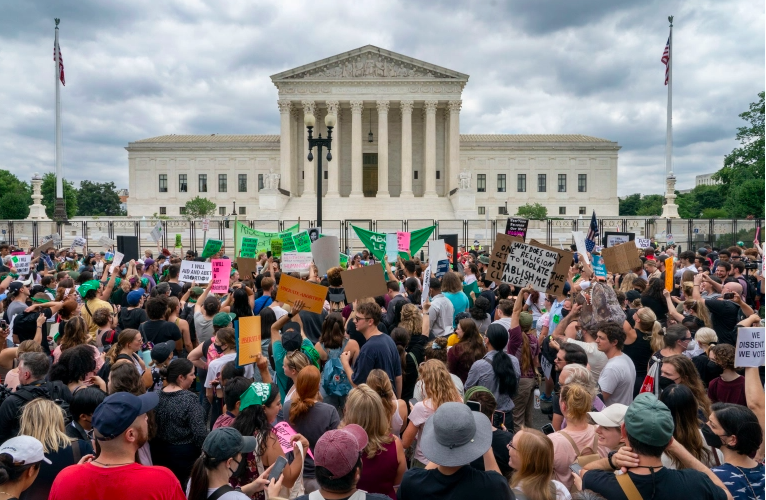
Source: Aljazeera
The leaked draft majority opinion by the US Supreme Court in the ongoing Dobbs v. Jackson Women's Health Organization case has already polarised America, with conservative media dedicating significant airtime lambasting the leak and pro-choice protests; and liberal media focusing extensively on the contents of the leak and its impact on other rights. This disparate media coverage symbolises just how divided Americans are on the issue. In fact, Pew survey data reflects this and finds that Americans' views of abortion haven't even changed significantly over the past three decades. In 1995, 60% of Americans polled expressed support for abortion while 38% didn't. Almost three decades later, in 2022, the numbers are similar, with only 61% expressing support and 37% not.
In this debate about ‘choice’ and the ‘sanctity of life’ what hangs in the balance is women’s reproductive rights and allied rights grounded in privacy, women’s liberty, and bodily autonomy.
Background: Roe, Doe, and Casey
Between the late 1960s and early 1970s, abortion was heavily regulated in the United States. However, some degree of liberalisation was also taking place. In 1973, the US Supreme Court handed down a landmark ruling in Roe v Wade that not only invalidated Texas’ then-restrictive criminal abortion laws but also legalised abortions nationwide. The top court did so by adopting the now-infamous ‘trimester framework’. According to this framework, states could not interfere with the abortion decision in the first trimester of a woman’s pregnancy- the decision had to be left to the woman and her attending physician. In the second trimester (between 13 to 24 weeks) states could regulate but not ban abortions only if the regulations promoted the health of the mother. In the third trimester, states could regulate and ban abortions but once again, only if doing so preserved the health of the mother. In Doe v Bolton (1973), another significant abortion case decided on the same day as Roe, the same top court held that “health” included, for the purposes of the law, not just physical health but also emotional, psychological, and familial factors, and the woman's age. Thus, women in ‘emotional distress’ or ‘psychological trauma’ anytime during the second or third trimester were also eligible for abortions under Roe and Doe. This lay in stark contrast to the Mississippi law which not only banned abortions in the second trimester but also excluded women’s emotional, psychological and other health factors from the ambit of the law as far as ‘medical emergency’ exceptions were concerned.
Apart from Roe and Doe, another landmark Supreme Court ruling in question in Dobbs is Planned Parenthood of Southeastern Pennsylvania v. Casey (1992) - which dealt with the constitutionality of five provisions of a 1982 restrictive abortion Pennsylvania law. In a fractured 5-4 ruling, the Court upheld most of Pennsylvania’s restrictions, but also upheld Roe’s central holding which guaranteed women the constitutional right to an abortion before fetal viability. Interestingly, the Mississippi law also made reference to one of Casey’s holdings in the body of its text (“the State has legitimate interests from the outset of the pregnancy in protecting the health of the woman and the life of the fetus that may become a child”) while neglecting the rest. Thus, the question before the court in the Dobbs case looks at whether all pre-viability prohibitions on elective abortions were unconstitutional or not. Put it another way, it considers whether a state’s interest in fetal life can trump the woman’s right to privacy and her liberty interests prior to when the fetus is viable.
What the leaked draft opinion says about Roe and Casey
The 98-page leaked draft opinion, authored by conservative-leaning Associate Justice, Samuel Alito, reflects the Court’s majority opinion in Dobbs. It should be noted that this is merely the first draft and not the final version. It states: “Abortion presents a profound moral question. The Constitution does not prohibit the citizens of each State from regulating or prohibiting abortion. Roe and Casey arrogated that authority. We now overrule those decisions and return that authority to the people and their elected representatives.” (pg. 67)
If this draft ruling were to stand, it would mean that Roe and Casey stand completely overruled; women would no longer have the constitutional right to an abortion (with a few exceptions) till viability. Overruling Roe and Casey implies that individual states could enact laws restricting, regulating, prohibiting, or banning abortions at any point during a woman's pregnancy. It should be noted that this draft opinion does not imply a nationwide abortion ban. Instead, it calls upon elected officials to take the abortion issue back to state legislatures, the way it was done before 1973. This would effectively allow legislatures across the country to draft a patchwork of laws as they deemed fit- with a majority of the country (twenty-six states) poised to heavily restrict, regulate, prohibit, or ban abortion and only fifteen states and the District of Columbia poised to protect abortion rights.
How this ruling affects a plethora of other reproductive rights
This draft ruling lays the foundation for overturning a plethora of reproductive rights beyond the right to abortion- such as the right to use contraceptives in private, the right to interstate and international travel for abortion, the right to use abortion pills, and the right to seek medical counselling on reproductive health.
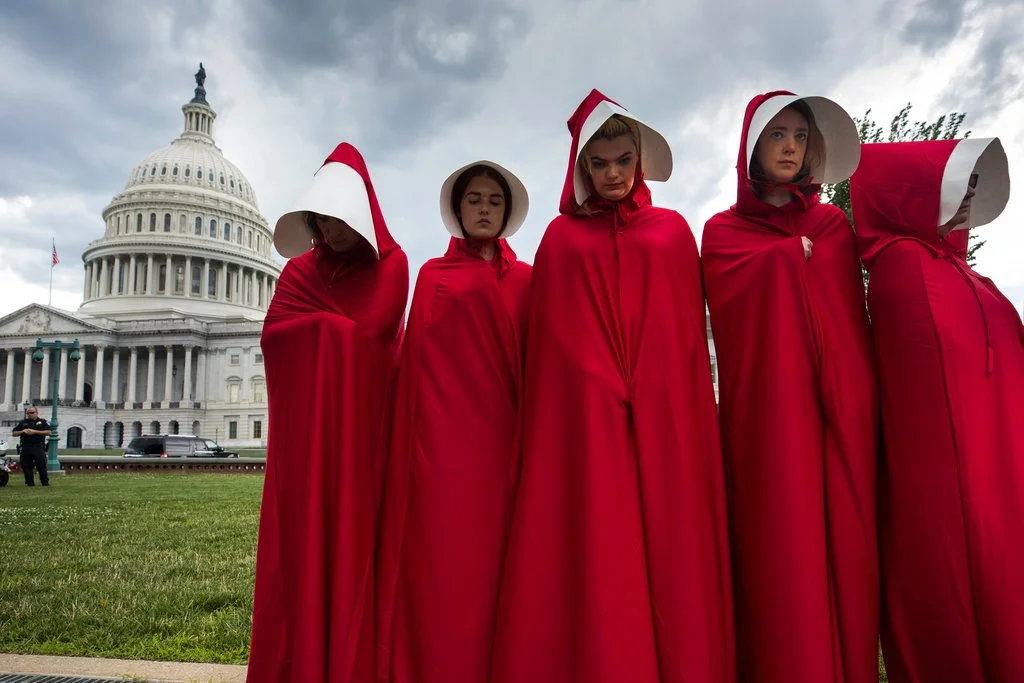
Source: The New York Times
When Roe was decided in 1973, the Court acknowledged that the right to privacy was not explicitly mentioned anywhere in the Constitution (as did Justice Alito in his draft opinion). However, the Roe Court also stated that cases as far back as 1891 (Union Pacific R. Co. v. Botsford) recognised the right to privacy in different ways, means, and contexts. Privacy, thus, existed in “zones” within the Constitution- and this applied to women seeking abortions. Because the Dobbs draft rejects this claim, it opens the floodgates for repudiating other reproductive rights that are also grounded in privacy. For example, states could now pass laws restricting access to abortion pills from their manufacture (through restrictions and regulations on private companies that manufacture such pills) to their sale (by banning the sale of pills and prosecuting those who sell, prescribe, and consume these pills). Similarly, private doctor consultations with obstetricians and gynaecologists could be heavily surveilled and/or restricted because if women no longer have the right to privacy with respect to abortions, they could very well also lose the right to seek private and confidential information that would enable them to get one. Contraceptives such as morning-after pills could also be regulated and/or banned if state legislatures take it upon themselves to “preserve and protect life” as early as possible- from the very moment of conception. The draft Dobbs decision is extreme because it leaves no room for any federal protection on abortion- not even at the 15-week mark. States would have the freedom to pass laws regulating abortion at any stage of pregnancy, from the first day to the ninth month, and none of it would be deemed an infringement of women’s liberty or privacy rights.
What lies ahead?
As the investigation into the leak is underway, one can only wait for the final outcome in Dobbs. Even though anywhere from 40%-70% of the American public supports Roe, it is unlikely that it will stay; and with almost half the country’s state legislators already poised to ban abortions without exception, reproductive rights activists clearly have a long and arduous fight ahead of them.
Disclaimer: All views expressed are personal.