The Debate Surrounding Spain's New Trans Law
Introducing gender self-determination in Spain
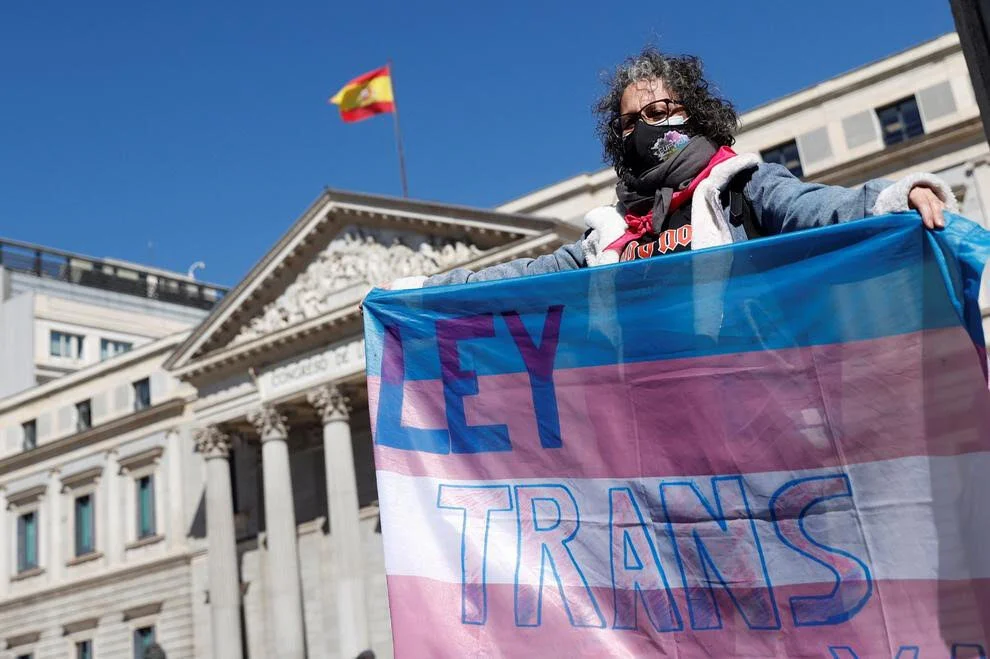
Photo Credits: AGENCIA EFE
Trans activist in front of the « Congreso de los Diputados » (the Spanish House of Commons)
Back in February, the Spanish Ministry of Equality presented the draft bill of the Law for the Real and Effective Equality of Trans People, or “Ley para la Igualdad Real y Efectiva de las Personas Trans,” commonly referred to as the Trans Law. This new law would allow citizens over 16 years old to change their official gender by self-determination, without having to go through any medical checks. Moreover, it aims to provide specific measures in order to guarantee the full equality of trans people in all areas of the public and private sector.
Taking into account the long-lasting demands of the trans community, the Equality Ministry wants to put an end to the pathologization of transgender and gender non-conforming individuals. This new legislation intends to modify the current law for gender transitioning, approved in March 2007, which still forces people to prove gender dysphoria through a medical or psychological report, or undergo a medical treatment to “align” with physical characteristics generally associated with the claimed gender. Through the years, some Spanish regional autonomous communities have approved laws for the protection and non-discrimination of trans people, allowing them to self-determine their gender. This has created a big gap between regions, as not all of them align with the self-determination process, which causes some confusion. Indeed, trans people living in more progressive autonomous communities are allowed to change their gender in their official documents dependent of regional administrations, but cannot do the same with their national identity documents. With this new proposal, the Ministry would like to harmonise the existing regulations and guarantee a national implementation framework.
A rift in the Spanish coalition government
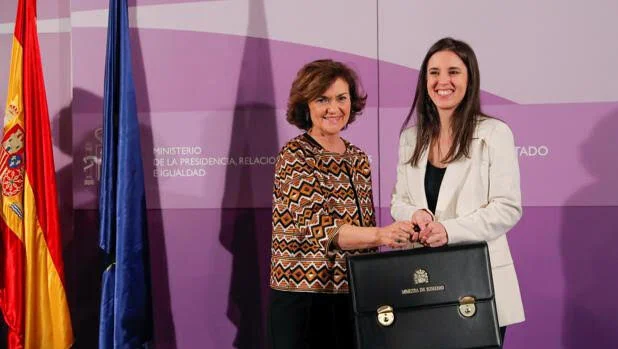
Photo Credits: REUTERS
Carmen Calvo (PSOE), First Vice-President of Spain and Irene Montero (Podemos), Minister of Equality
This draft bill, promoted by Irene Montero, minister of equality and member of Podemos, caused quite a commotion in the Spanish public debate and within the left-leaning coalition government. Podemos and the Spanish Socialist Workers’ party (PSOE), which govern in coalition since January 2020, do not seem to have the same position when it comes to the legislation of trans rights.
After the publication of the draft bill, Carmen Calvo, Spanish deputy PM and member of PSOE, expressed her unease regarding the new Trans Law during an interview: “I am concerned about the idea of thinking that gender can be chosen by simple will or desire, putting at risk the identity criteria of 47 million Spaniards.” Calvo shares this opinion with some other feminist members of her party, pointing out that gender self-determination could have a negative impact on women’s rights in relation to gender based violence and parity.
In summer 2020, an internal document of the Socialist party was leaked. It aimed to summarize the “arguments against the theories that deny the reality of women.” By signing this document, the deputy PM and other members of her party affirmed that they were “against the positions that argue that feelings, expressions, and manifestations of a person's will automatically have full legal effect.” They also referred to queer activism, stating that it “blurs women as political and legal subjects, jeopardizing rights, public policies of equality between women and men, and the achievements of the feminist movement.”
Despite the critiques from their government partners, Podemos has been very clear about its position. For the far-left party the answer to the debate is very simple: “trans rights are human rights.” In early March, Irene Montero said during an interview that she “cannot give in,” adding that the law will be approved under the current administration.
In defense of “sex”: feminists against the trans draft bill
Immediately, the debate shifted to the public sphere, engaging activists from the whole spectrum of the Spanish feminist movement. Even though in general terms the draft bill had a positive reception, some sectors — usually self-named “radical feminists” — expressed strong opposition to it. The platform Contra el Borrado de las Mujeres (“Against the Erasing of Women”), launched in 2020, is a clear example of the current backlash over trans rights in Spain. The group is integrated by different organisations and “feminists opposed to the removal of the sex category in legislation and statistics.” They argue that imposing the concept of gender as an identity “reinforces sexist stereotypes” and “has a negative effet on the life of women and girls.”
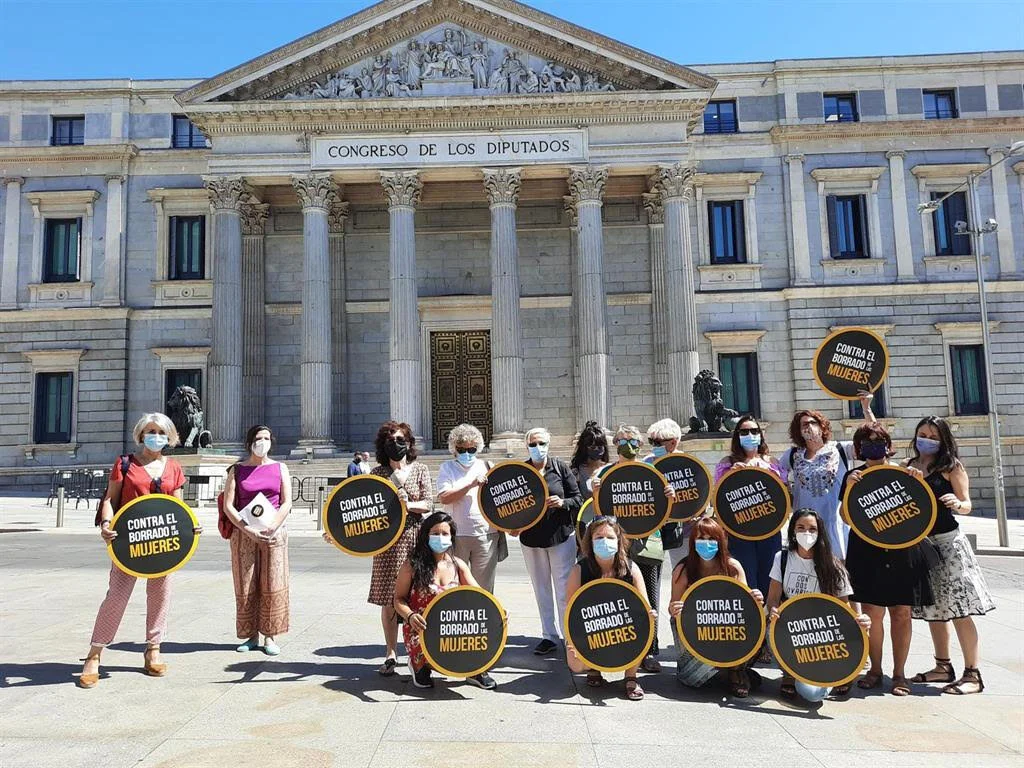
Photo Credits: EUROPA PRESS - Archivo
Activists from the platform « Allianza Contra el Borrado de las Mujeres » in front of the « Congreso de los Diputados » (the Spanish House of Commons)
According to them, Spain’s adoption of this new law would trigger the second phase of a strategy developed by “the queer and trans movement at an international level” aiming to eliminate sex as a legal category. To avoid this alleged three-phase plan, the platform defends the primordiality of sex when it comes to explaining the discrimination and violence women face. Moreover, they believe that the Trans Law would automatically cancel the current legislation regarding gender-based violence. Male abusers could define themselves as women prior to their judgment and consequently avoid the specific punishment outlined in this law.
In actual fact, this issue is addressed in the article 14 of the draft bill, stating very clearly that the change on the official gender and name will not have any impact on the persons prior legal obligations, including the ones established by the Organic Law of Protective Measures against Gender Violence.
On the 23rd of March, Lidia Falcón, founder of the Feminist Party of Spain, participated in an event organised by Hazte Oír (“Make Yourself Heard”) with the following title: “Dismantling the Trans Law. If you are born a girl, you will remain a girl.” The organization Hazte Oír is part of the CitizenGO group, a community composed of “active citizens” aiming to “defend and promote life, family and liberty” through online petitions. If we take a look at the subjects of their campaigns, we can see that several of them are specifically directed against the LGBTI community. With titles such as “Disney: STOP LGBT indoctrination around the world,” “Keep trans lobby group Mermaids out of primary schools,” or “STOP LGBT indoctrination at Disneyland.”
Hazte Oír has organised trough the years several acts against what they call “LGBT indoctrination," using unmistakably transphobic slogans such as “Boys have a penis. Girls have a vulva. Don’t be fooled.” Falcón’s participation in the event came as a surprise to some people, considering her status as a historical member of the Spanish feminist movement who was even persecuted during Franco’s dictatorship. Lidia Falcón had already in many occasions openly expressed her opposition to all legislation promoting gender self-determination, to the point of denying the existence of trans women. This time, the situation was quite different. Not only did she accept to engage with a “pro-life” and openly anti-feminist organisation, but she participated in a discussion panel alongside a deputy of the Assembly of Madrid from the radical right-wing party Vox.
Towards equality: the importance of gender self-recognition
The International Lesbian, Gay, Bisexual, Trans and Intersex Association (ILGA) expressed their concern about this matter through a letter addressed to Pedro Sánchez, prime minister of Spain, and Irene Montero, minister of equality. In this letter they showed their worry over the opposition of some members of the government to the trans draft bill, stressing the importance of gender self-recognition in all international human rights standards. ILGA encouraged the government to fight the transphobic and hate speech generated by the debate around the proposed law, stating that these discussions have a strong negative impact on the well-being and mental health of trans people in Spain.
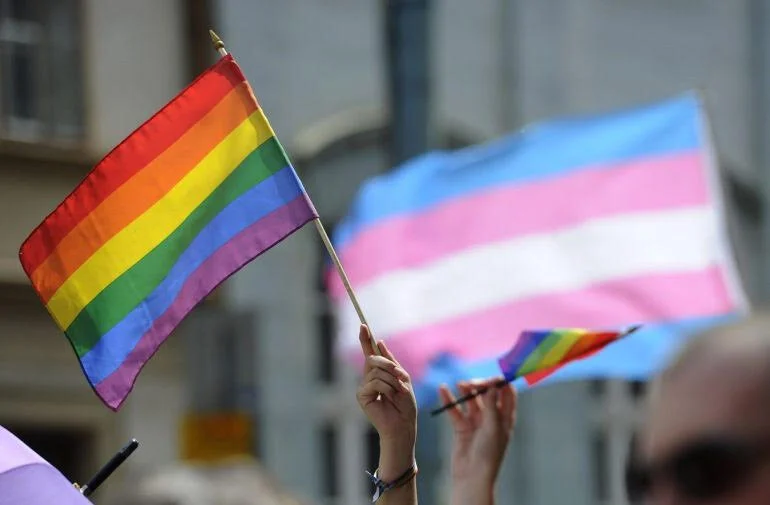
Photo Credits: EUROPA PRESS Archivo
The LGBT Flag and the Trans Flag
As a 2020 report by the European Commission states, many trans people “pointed to the greater ease that they experienced in their day to-day life after Legal Gender Recognition procedures as a result of having ID documents that matched their gender identity and gender expression.” They also expressed a feeling of empowerment and stated that they no longer felt forced to “come out about their trans identity in public life.” In regards to employment, the situation was similar. Many respondents reported “improvements in accessing the labour market as a result of changing their legal gender marker.” Taking these results into account, it seems that trans people in Spain would largely benefit from the approval of the trans draft bill.
The implementation of the Trans Law would not only help trans people and gender non-conforming individuals to feel more protected and free in their daily life, but would also put Spain — alongside other European countries like Denmark or Belgium — at the forefront of trans rights. In 2005, Spain became the third country in the world to legalize same-sex marriage. More than fifteen years later, it is time for the Spanish government to leave behind any “fears” and “worries” nurtured by ignorance and transphobia, and to push forward with a law that will substantially improve the life of trans people in Spain.
About the Author

Astrid Tvevad Polo
Hello! My name is Astrid. I am half Spanish and Danish, but I am currently living in Belgium. I pursued my higher education in Paris, France, where I studied a Bachelor's in Sociology and a Master's degree in Gender Studies. I am especially interested in the sociological study of far-right/conservative movements and antifeminism. I love reading, writing, discussing politics—most of the time—and eating good food. I would describe myself as passionate, curious and firmly committed to equality and social justice.