What Happened to India’s Vaccine Diplomacy?
Source: Sunday Guardian Live
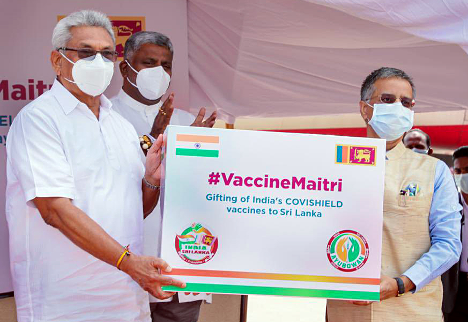
Even before the COVID-19 pandemic, India was one of the world’s largest vaccine producers, manufacturing approximately 60% of the world’s vaccines. Accordingly, India initially became one of the global leaders in COVID-19 vaccine dissemination , delivering tens of millions of doses to countries in Asia, Africa, and the Americas during the first few months of 2021. This large-scale state-sponsored vaccine proliferation has often been referred to as vaccine diplomacy, where global powers like India, China, and the US use vaccine deliveries to not only contribute to a swifter end to the pandemic, but to also strengthen bilateral and multilateral relations with recipient countries. However, Indian vaccine diplomacy quickly faded when a massive second wave of COVID cases and deaths swept India in spring 2021. To firmly restore the importance of its vaccine diplomacy, the Indian government needs to make sure it is as protected from future domestic waves as possible. India should also take steps to better compete with its main regional rival China in vaccine delivery.
What went wrong in India?
Source: Mint
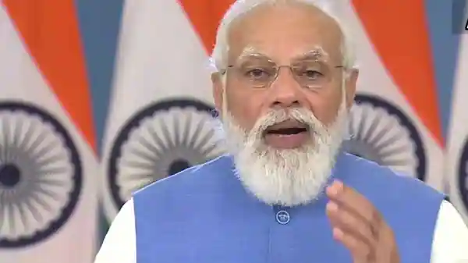
In 2020 and early 2021, many, including India’s leaders, believed that perhaps COVID did not hit India as hard as expected or that India’s public health system was effectively able to contain the pandemic when cases first appeared. This contributed to a significant lapse in safety measures like widespread masking and social measuring, as well as very high participation in public religious festivals and other crowded events. Then, from March-May 2021, cases skyrocketed across the country, shattering daily records- on May 1st, 2021, there were over 400,000 cases reported in India (the US reported less than 50,000 that same day). Unsurprisingly, deaths also spiked and there was a debilitating shortage of critical medical supplies and devices, like oxygen tanks. Indian Prime Minister Narendra Modi and his administration were widely criticized for declaring a premature victory against COVID-19 prior to this second wave and for exporting vaccines they could have used domestically. In response to this second wave and such criticism, India imposed drastic export restrictions on vaccines, all but eliminating vaccine outflows to other countries and putting vaccine diplomacy on hold throughout much of 2021.
In stark contrast, China appears to have done much better than India in containing COVID in 2021. On December 26, 2021, the outbreak in the city of Xi’an provided the highest daily case count since 2020, but this was only 158 cases. Although there is international skepticism regarding whether China is accurately providing its COVID data, the country’s policy of swiftly and strictly locking down cities with significant numbers of cases seems to be paying off. Accordingly, China is stepping in where Indian vaccine diplomacy was halted, sending vaccines to Nepal, Bangladesh, and other countries who once depended on India for their vaccine supplies. China is using these developments to strategically align India’s neighbors with the former in order to geopolitically aid China’s expansionary foreign policy objective of being seen as the leading power/influencer in South Asia.
What can India do to regain lost ground?
Source: The Economic Times
In October 2021, after hundreds of millions of Indians became fully vaccinated (a number that is continuing to sharply increase to this day) Prime Minister Modi declared that India is finally relaxing its export restrictions and is “ready to save humanity” once again through vaccine deliveries. However, the key to sustainably redeeming India’s vaccine diplomacy policies is carefully and effectively balancing domestic public health with international distribution. As early as June 2021, as lockdowns began to ease post-second wave, tightly packed crowds came back and social distancing and mask wearing declined. Especially since India now fears a third wave driven by the recent surge of the Omicron variant worldwide, the Indian government needs to be more vigilant in enforcing public health measures and controlling crowd sizes nationwide. Additionally, while the news about increasing vaccination is good, India has its own growing anti-vaxx movement, which it needs to countered with productive, anti-myth information campaigns and better control of what is posted online. If the proper measures are taken to address these problems, India’s new vaccine diplomacy focus is sure to be longer-lived than the last.
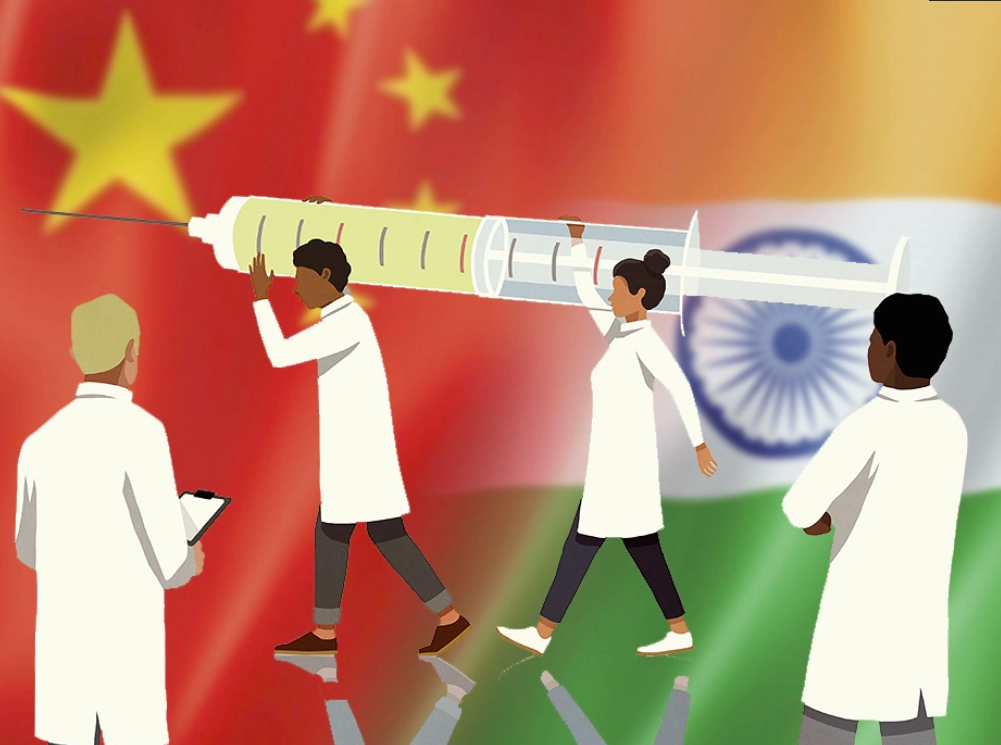
India also has advantages in its efforts to compete with China over vaccine diplomacy. In July 2021, Indonesia and Thailand announced that they were moving away from Chinese Sinovac vaccines because of concerns of their quality and efficacy. They decided on other vaccines like those created by AstraZeneca (of which India is one of the largest producers). Additionally, other countries like Sri Lanka have seen controversies concerning the high financial cost of the Chinese vaccines. If its past vaccine diplomacy efforts are any indication, India can very likely get vaccines to these countries that are both cheaper and more effective than those provided by China. Additionally, India has the support of some of the most powerful countries in Asia and the world who also want to see China’s growing influence mitigated. In September 2021, the international group known as the Quad (comprised of the US, Japan, Australia, and India) reiterated support for the Quad Vaccine Partnership, which aims to pool each country’s resources to provide around 1 billion vaccines to be distributed globally by the end of 2022. This a strong alternative for countries either considering or already receiving vaccines from China.
Until April 2021, India was one of the world’s leaders in vaccine diplomacy- delivering over 65 million doses worldwide. During that time, Indian made strides in improving its relations with recipient neighbors like Nepal and Bangladesh. These strides were replaced with disappointment when Nepal and Bangladesh were forced to turn elsewhere for vaccines as India suffered from its second COVID wave. However, many South Asian countries prefer a balance of power between India and China in the region and are therefore eager to see India shipping vaccines at full capacity again. The opportunity is there for India, but whether India will permanently become a reliable vaccine exporter or shrink away again in the face of another wave remains to be seen.
About the Author

Tuhin Chakraborty is a student at the Gerald R. Ford School of Public Policy at the University of Michigan. He has worked in the US House of Representatives and on the government affairs team of Quicken Loans, and was most recently a South Asia and International Security Intern at the American Enterprise Institute. Tuhin has previously been published in E-International Relations, International Policy Digest, and the Michigan Foreign Policy Review.
Linkedin: https://www.linkedin.com/in/tuhin-chakraborty-88a857bb/