Mozambique: A Trail of Death and Destruction
Trigger Warning: Violence and Death
What’s Happening in Mozambique’s Violent North?
It was October 2017 when things started to escalate in Mozambique’s Cabo Delgado Region involving Islamist militants. An al-Shabab militia that has been taking over the area is thought to trace back to the wider Islamic State Group. Additionally, nearby regions such as Niassa and Nampula are also being targeted.
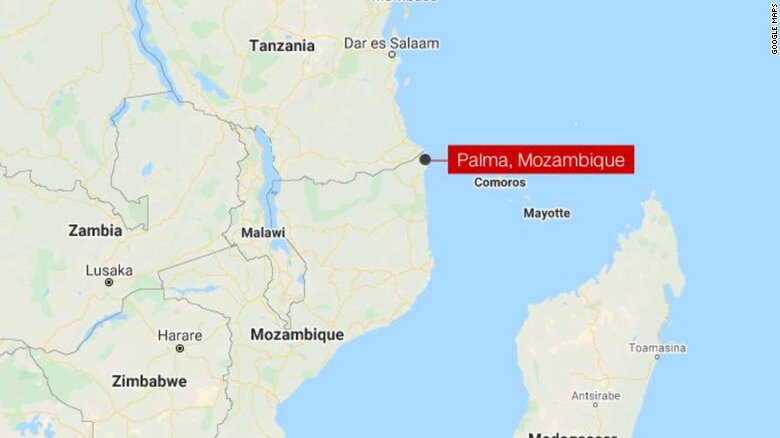
Photo Credit: CNN
Late March, when the absolute nightmare of a takeover, overtook Palma, a city that is located in northern Mozambique and that coincidently is highly rich in natural resources such as oil and natural gas, which is also the home for Exxon Mobil Corp, Total and other major companies.
The events that have been taking place are disheartening, to say the least. The ISIL militants have gained total control of the area by ransacking towns and taking over key roadways. Not only that but they also have kidnapped young woman and children and beheaded civilians. Another alarming event took place in August 2020, where the rebels have been in complete control of Mozambique’s port town of Mocimboa da Praia. This town happens to be strategically close to the site of natural gas projects worth some $60bn.
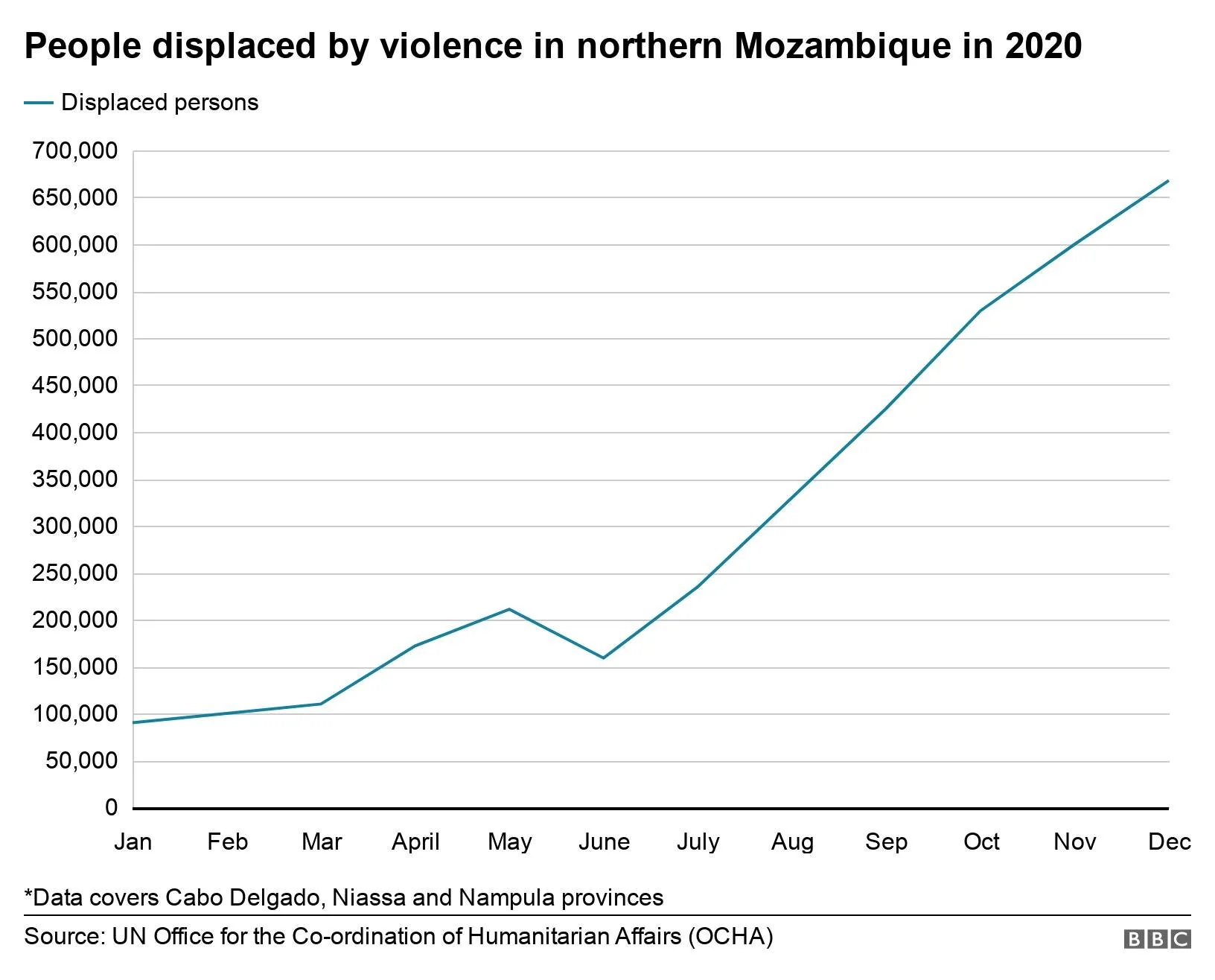
Graph 1: BBC
All of these catastrophic events have led to the displacement of around 700,000 people leaving ghost towns behind and killed more than 2,500.
Moreover, the devastation does not appear to have a near end since the rebel militants seem to be recruiting more and more people within and outside Mozambique. Emilia Columbo, from the Washington-based Center for Strategic and International Studies, states: “We get reports of boats full of youths getting intercepted on the way to Cabo Delgado”.
As it is possible to observe in graph 1, these attacks have significantly escalated over the past year. Having said this, according to the Armed Conflict Location and Event Data Project (ACLED) there have taken place more than 570 violent incidents from January to December 2020 in Cabo Delgado. Amongst the 570 incidents, there has been one that unfortunately stood out by its horrifying content. This was the beheading of over 50 people at a football pitch, this happened in 2020 but surprisingly this heartbreaking news hadn’t been spoken about as much as it should’ve.
The Real Dilemma
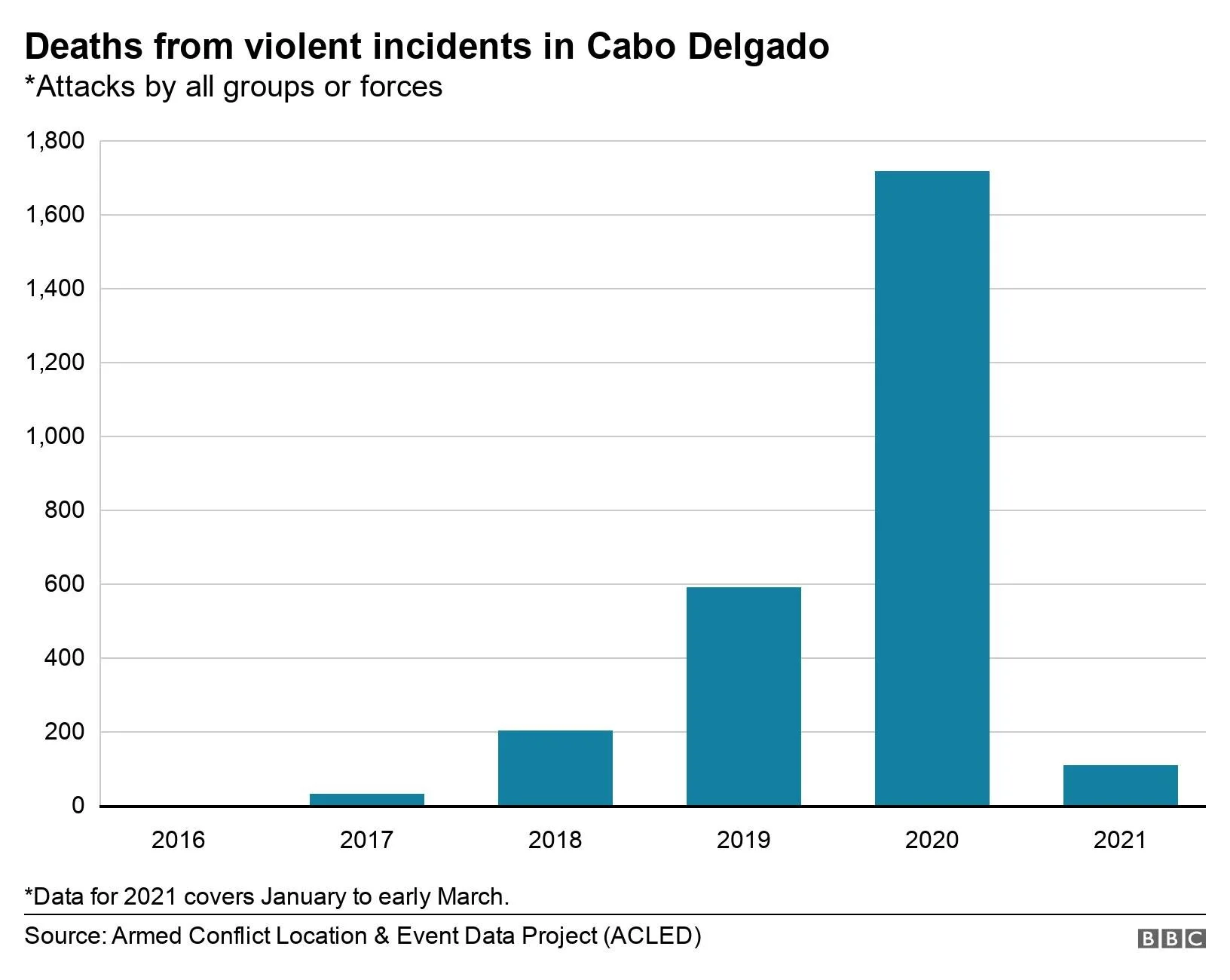
Graph 2: BBC
Concerns for Mozambique’s ill-equipped forces in regards to responding to the developing situation have been long revealed. However, as Eric Morier-Genoud, a professor at Queen’s University Belfast, stated, “The government of Mozambique is very sensitive in relation to its sovereignty,”, which could be a very big issue when it comes to a quick action against the rebels. This is one of the biggest challenges of state sovereignty, the lack of promotion of Human Rights because the very definition of sovereignty enables states to non-intervention in their domestic affairs.
Having said this, it is obvious that there is a massive contradiction between Human Rights and Sovereignty. By definition, Human Rights, encompass the basic rights and freedoms that belong to every individual in the world, from birth until death. Furthermore, the institutionalisation of Human Rights in the international system, albeit being a rather ‘recent’ concept, allows international action under certain circumstances. Mozambique, being a sovereign state, will not have foreign aid unless asked for.
Foreign Involvement in Mozambique
As of now, incidents have stagnated due to foreign involvement in stabilising the rebels. However, for the most part of this insurrection, the Mozambican government had declined international help. It was only with the Jihadi’s group alarming exponential growth that Mozambique saw itself at a crossroads and had no other option than to accept assistance.
In order to support their troops, the Mozambican government has invited US Forces into the field. The agreement between both governments was made in a way that the US’s purpose in Mozambique was to train local forces in order to fight the terrorist militants.
Portugal, former colonial power, has also committed to the helping and training of the Mozambican military by sending roughly ‘60 trainers in order to train marines and commandos’.
Even though declined, Maputo had also requested the military help of South Africa. However, Cyril Ramaphosa stated that ‘the insurgency is too big for a bilateral response.’
Lastly, the pertinent multilateral security pact in the region, the Southern African Development Community (SADC), have met last Thursday the 8th of April, with the Organ of Politics, Defense and Security, expressing their concerns for Mozambique’s North. However, apparently SADC, ‘lacks the necessary funding to provide significant assistance.