Understanding the Myanmar Coup
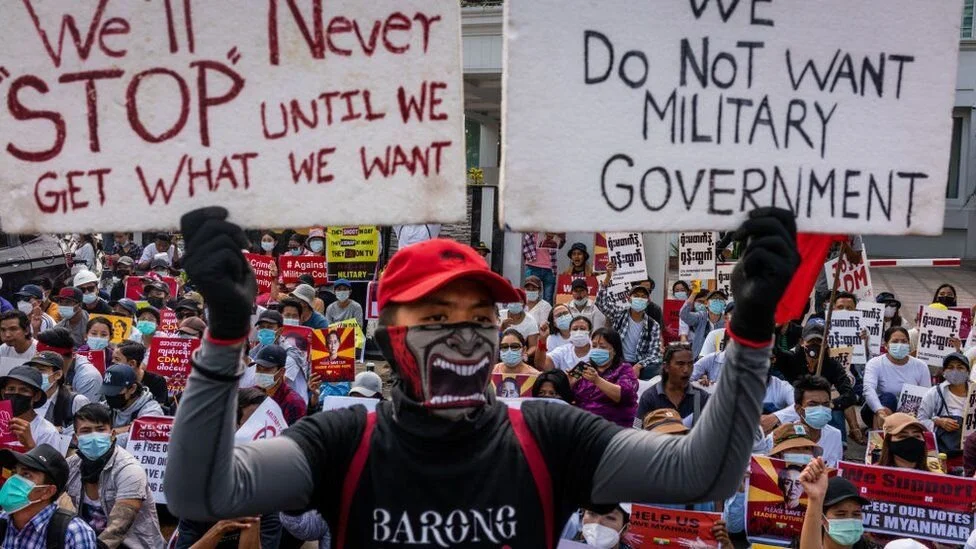
Photo Credits: BBC
114 civilians including children were killed on March 27 by the junta’s forces in violent crackdowns on protesters across Myanmar. The worst incidents came out of Yangon and Mandalay where protesters took to the streets despite warnings that they would be “shot in the head” if they protested on the Armed Forces Day. The defense chiefs of a dozen countries, including the US and UK condemned the lethal use of force against the civilians pointing out that “a professional military follows international standards for conduct and is responsible for protecting — not harming — the people it serves”. The UN described the day as the “bloodiest day” since the coup. But this is not the first day where the citizens of Myanmar witnessed the heavy-handed crackdown by the junta. The violence is a daily feature in Myanmar now where pro-democracy protesters refuse to back down and demand the restoration of their rightfully elected government. On February 1, the Burmese army led by General Min Aung Hlaing seized power from the civilian government in a coup and jailed Counsellor Aung San Suu Kyi. Aung Hlaing and his compatriots, however, have constantly stated their intention to hold “free and fair” elections in a year. But the actions of the Junta ever since seizing power speaks otherwise.
Why Western Sanction won’t Work
The western countries have resorted to imposing sanctions on Myanmar and more specifically the military and its economic interests. On the one hand, while sanctions may seem to the work on paper but in reality, it ranges from mere shaming by oral condemnation, which the western countries have done umpteen number of times, to a gamut of embargoes ranging from trade to travel. The problem with sanctions is that they need to be imposed multilaterally and sanctions will hurt the most when countries with economic interests in Myanmar would go about imposing such sanctions. Or else the situation will be like boycotting something you have never really had any interest in, in the first place. Sanctions against Myanmar will not be successful unless they have been imposed by China and its neighbouring ASEAN countries as well. The effect of European sanctions is like firing a gun with blank shots, too much noise but no real damage. There is ample evidence to show that western sanctions against Myanmar have not had the intended effect.
In 2003, the United States and OECD countries imposed sanctions on Myanmar. In 2001, before the sanctions, Myanmar’s trade stood at USD 6.28 billion which increased to USD 7.1 billion in 2004 after the sanctions were imposed. It is said that “necessity is the mother of invention”, the ingenuity here being that Myanmar not only began to diversity its trading partners but also its products. China and Thailand stood out as the top trading partners of Myanmar during the sanctions period, effectively rendering the sanctions useless. To make any sanctions work, as mentioned earlier, the effort has to come from Myanmar’s most immediate ASEAN neighbours and China. However, this may be harder to achieve given that the ASEAN has a long history of non-intervention and some of its member states’ idea of democracy is questionable.
Reason Behind the Coup
To come to a solution, one first has to understand why the coup took place in the first instance. The 2020 elections in Myanmar was swept by Suu Kyi’s National League for Democracy (NLD) which won almost 80% of the votes, while the army-backed Union Solidarity and Development Party (USDP) suffered a defeat winning only 33 seats. The coup was timed perfectly just before the new Parliament was to convene. Had the Parliament come into session then the NLD victory would have been constitutionally endorsed. So, Aung Hlaing, the general with Presidential ambitions and without public support decided to take control of the situation by declaring the elections as fraudulent and taking the elected leaders into custody. The military wanted the government to “settle the issue of voter list fraud” and “postpone lower and upper-house parliament sessions”. However, an agreement was not reached between the NLD and the military leading the military to enact section 417 under which a state of emergency can be declared “due to acts or attempts to take over the sovereignty of the Union by wrongful means”.
Possible Solutions to the Coup
So now that we know ‘why’ the coup was staged and what actions are useless to prevent the coup from being reversed we can talk about steps that could hypothetically be taken to revert Myanmar to its democratic path. There are 2 factors that I would like to point out — the internal and the external. The internal factor is about change coming from within Myanmar. Catherine Renshaw in her article about “Democratic Transformation and Regional Institutions” says that the success of any democratic transformation “depends on whether or not satisfactory bargains can be struck between the military and opposition forces”. She further states that these bargains have to fulfil two conditions — “first, they must meet the military’s imperative of preserving national unity, security and stability. Second, the reform process must be perceived by the opposition as genuine.” The NLD and the military have to come to an agreement regarding the 2020 elections. What may be difficult about this agreement would be that the public is particularly opposed to any form of intervention in politics by the military. The sentiment grows by the day with the violence projected by the military, which in turn has led to an even more surge in popularity of Suu Kyi. The quicker an agreement is reached the more beneficial it is for all parties including the public.
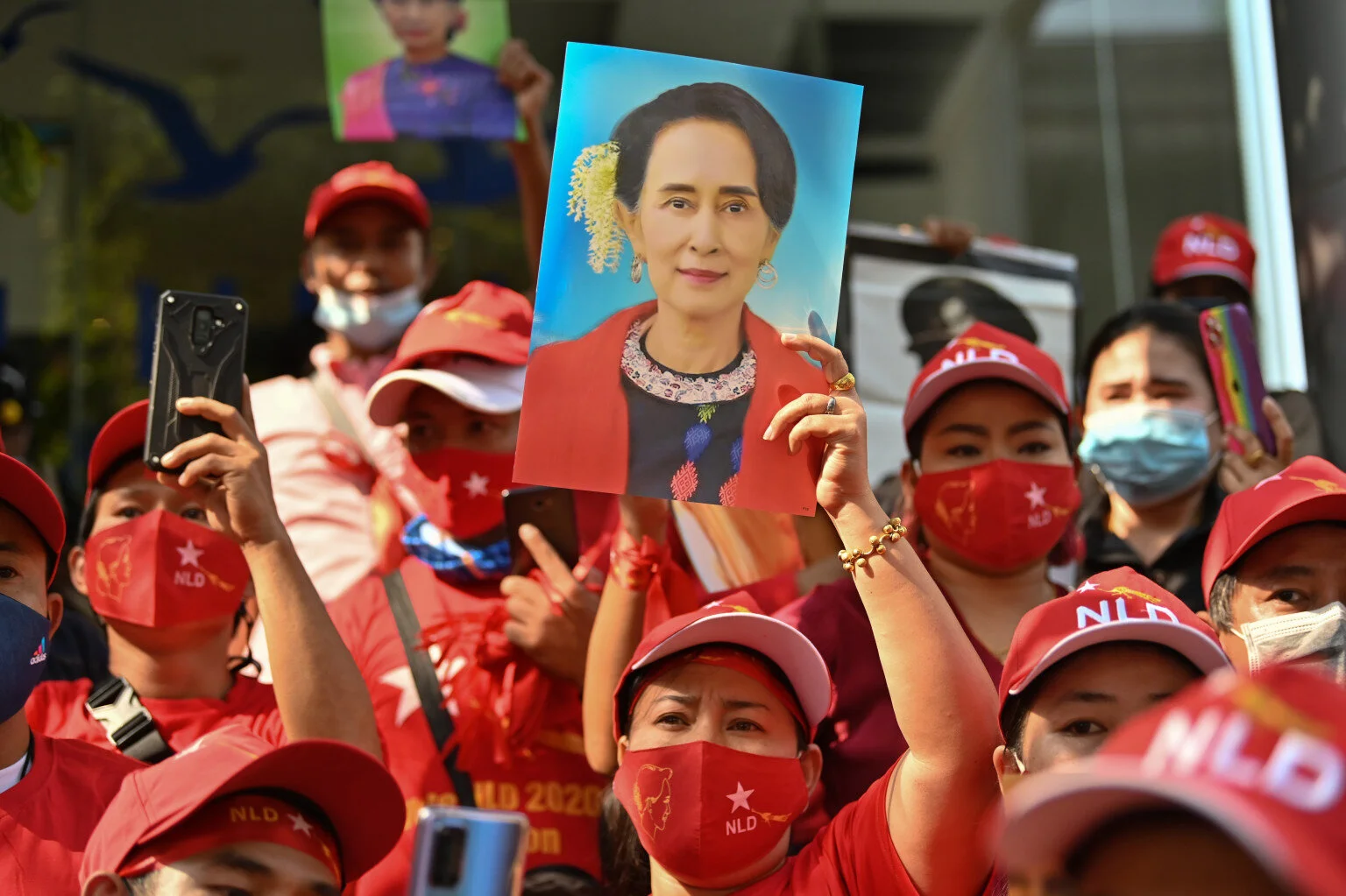
Photo Credits: Foreign Policy
The external factor in this hypothetical solution would be that China and the ASEAN participate in imposing sanctions on the Tatmadaw (the Myanmar military) to cripple them. As the article has mentioned earlier, research has shown that Myanmar has been successful in circumventing previous sanctions with the help of the ASEAN and China. However, a scenario in which China agrees to impose sanctions on Myanmar is highly unlikely. Being a hegemon in the international community along with the US, it is unlikely that China will fall in line with the US sanctions. Furthermore, China’s economic and strategic interests in Myanmar far outweigh any push for democracy that would effectively render China’s influence to zero in Myanmar. The ASEAN, on the other hand, has followed a strict policy of non-intervention and after signing the RCEP agreement with China, it is unlikely that they too will do anything more than issuing oral condemnation. However, if any of these aforementioned hypothetical situations were to come to life, then one could expect a speedy resolution of the situation in Myanmar.