Women in Afghanistan: 20 years of progress lost in one day?
Source: news.un.org
In early 2020, the United States signed the Agreement for Bringing Peace with the Taliban and agreed to gradually leave Afghanistan. At the time, besides general scepticism about the outcome of this ‘peace deal’ was the exclusion of women from the agreement. Subsequently, the deal did not indicate any commitment from the Taliban to respect women’s rights, and therefore the deal would fail to provide peace as peace “could not be sustainable when half of the population would be living perennially on the edge.”
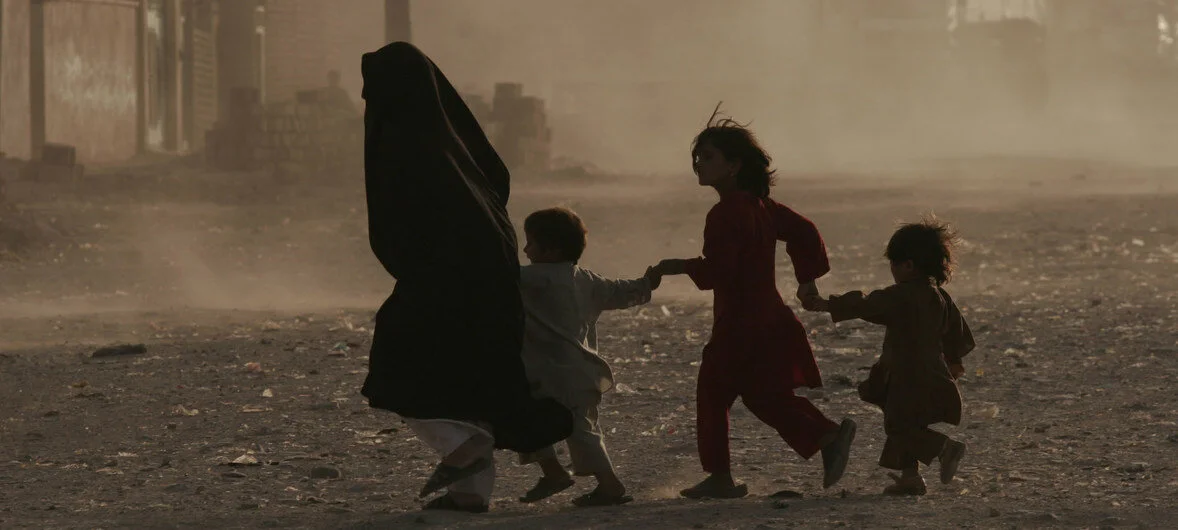
Short after the United States left Afghanistan the Taliban took control over the country. Deteriorating conditions, the lack of humanitarian aid and the fall of Kabul resulted in an unfolding humanitarian crisis, where Afghan women and girls are fearful of their future. After the Taliban ‘took office’ their spokesperson at a conference attempted to reassure citizens and the international community that women’s rights will be respected in line with Islamic law. But what does this mean exactly for the 14 million women and girls who live there? Many fears that the progress which has been made so far will be lost under the ruling of the Taliban.
What progress have been made for women’s rights in Afghanistan?
After the Taliban rule was ended in 2001, The United Nations started its peacebuilding mission in Afghanistan and implemented The Bonn Agreement. The Bonn Agreement was one of the many international initiatives at that time, which aimed to provide a roadmap for the reconstruction of the Afghan government including a more gender sensitive approach. Since then, steps were taken to build a path towards women’s empowerment. For example, the Ministry of Women Rights affairs and Afghanistan Independent Human rights commission were established in 2004, and these were followed by women led initiatives towards a bottom-up approach to improve women’s rights in Afghanistan. As a result of such initiatives, a generation of women in the country grew up accustomed to Western patterns of individual freedom which is not necessarily bound by only one ideology. Their rights to work, study and vote were much more widely accepted, some even got jobs in the government as civil servants. However, the conditions were still not ideal, the flaws in their legal system meant that women were still somewhat ‘abandoned’ in terms of justice. Despite some progression in terms of achieving a more gender inclusive society, many girls were married underage, and were afraid to come forward in the case of domestic violence.
Women’s future under the Sharia law
Source: news.sky.com
The Taliban spokesperson stated that Afghan women’s rights will be respected according to Islamic law, and their aim is to build a peaceful county. Islamic law is an ancient legal system, which is based on the interpretation of the Quran -the holy book of Islam- and the Sunnah, which refers to a good behaviour to follow. Religious teachings which underpin Islamic laws are often based on the interpretation of the individual, and some might use their own interpretation as an instrument to support their agendas. Although protecting women “is so clearly written in the Quran and […] and Islam always promotes the person, health, and dignity”, patriarchal interpretation of religious texts means that women can be oppressed, even tortured in the name of religion, just as it happened in Afghanistan over 20 years ago.
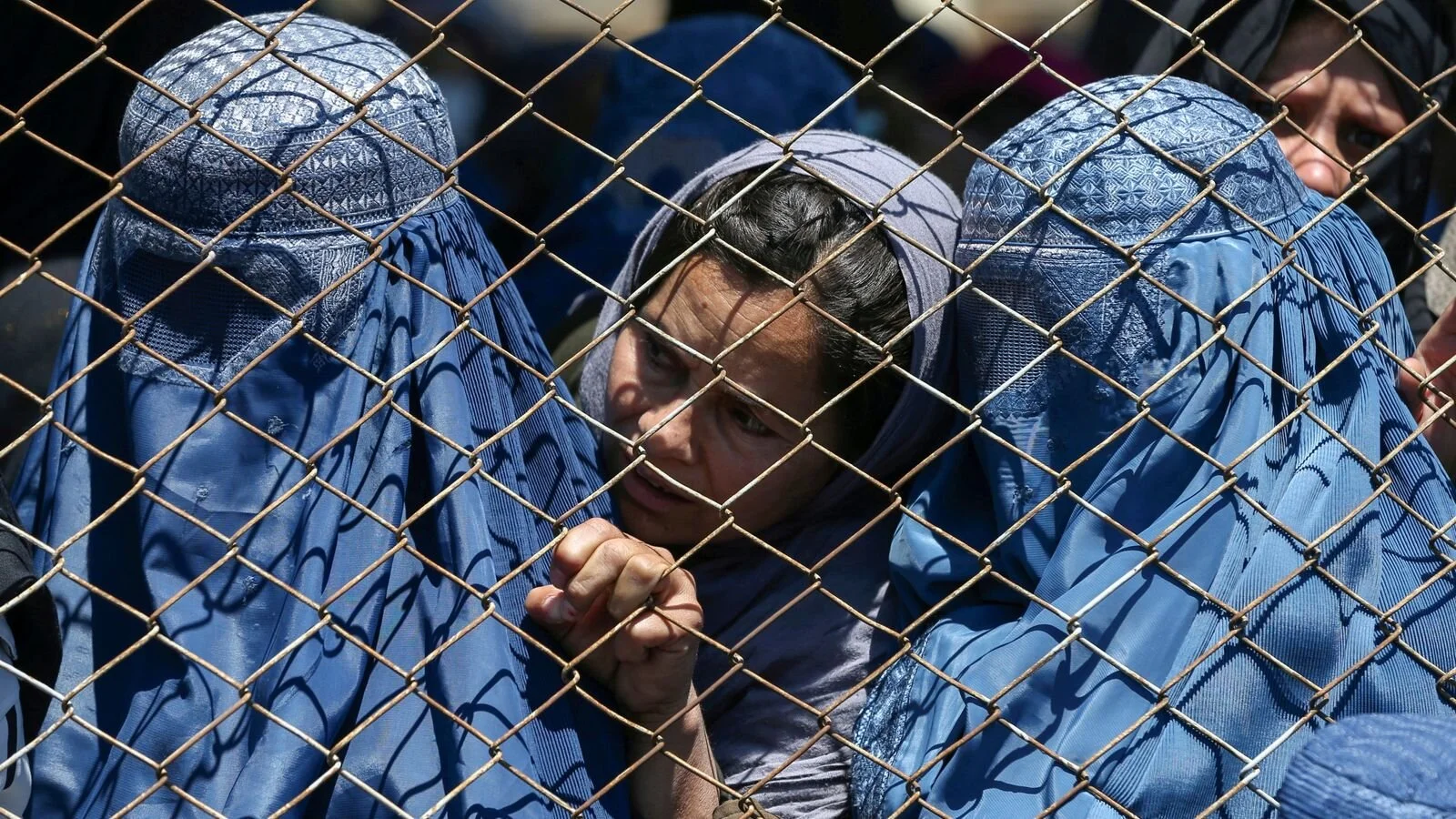
Undoubtedly, people in Afghanistan and people around the World are sceptic and concerned of the future of Afghan women. Over two decades ago when the Taliban ruled Afghanistan women were subjected to strict rules. Under Sharia law, “they banned almost all education for women and girls, imposed punishments including stoning, lashing, and amputation, and confined women to their homes unless they were escorted by a male family member, denying them access to most employment — or even a walk.” Despite the Taliban’s ‘reassuring’ statement, some regions are already seeing the ‘old rules’ returning, as women are being denied education and not allowed to leave their homes. Some even fears that the reassuring statements by the Taliban about peace and respecting women’s rights are just empty promises, and they are merely a way for the Taliban to achieve some extent of legitimacy within the international system. Consequently, many fears that 20 years of progress have been lost and women will suffer once again under the Taliban’s regime.
they banned almost all education for women and girls, imposed punishments including stoning, lashing, and amputation, and confined women to their homes unless they were escorted by a male family member, denying them access to most employment — or even a walk.